Vienna e l’ossario di zucchero
Dal finestrino del treno vedo il paesaggio schizzare via. Sto andando verso Vienna col notturno da Venezia, e il cielo sfuma in diverse gradazioni di grigio che si incastrano l’una dentro l’altra, ruvide e pixelate come carta vetrata, mentre alle mie spalle un tramonto cola un arancione catarifrangente. Dentro lo scompartimento mi muovo con la sensazione che qualcuno, o meglio qualcosa, mi stia guardando, ma quando mi volto non vedo niente. In fondo al vagone noto una scala che prima non c’era; quando salgo è ormai buio e i neon del treno sono azzurrino ospedale.
Nello scompartimento scorgo sedute alcune figure che prendo per persone, anche se hanno qualcosa di strano nei volti: gli occhi troppo grandi, le labbra gonfie e pendenti, la pelle lucida. Mi fissano coi loro cappotti lunghi, i cappelli larghi e il loro mormorio basso e continuo, di cui non capisco il senso. Con le dita mi tirano la giacca e le braccia, e quando cerco di allontanarmi mi accorgo che sono più numerose di quanto avessi creduto. Alcune hanno il corpo gibboso, altre conservano qualcosa di umano nei lineamenti, sembrano collage di persone che credo di conoscere. Cerco di liberarmi e comincio a colpire alla cieca, finché la mano incontra una bottiglia di vino che sollevo e con cui colpisco una delle figure sulla testa; il suo volto si affloscia come una bambola di gomma piena d’aria, per poi gonfiarsi di nuovo in un colpo solo, e mentre la guardo tornare alla sua forma cerco di gridare, ma non mi esce più la voce. Una figura di donna cerca di strozzarmi, ha orecchini grandi e circolari, capelli cotonati, la bocca è aperta ma è un abisso dentro cui non ci sono denti, né lingua.
Mi sveglio con un urlo e con la tachicardia a palla. Oddio, sono nel mio albergo di Vienna, a Weiden. Fuori ci sono ventotto gradi anche se è l’una e mezza di notte e io non ho chiaramente digerito l’hot dog che mi sono mangiato nel mercato rionale. Che anche l’Austria sia diventata un forno mi inquieta e non mi fa più dormire, per cui dopo essermi rigirato per mezz’ora e aver scrollato Instagram senza un perché, mi sono buttato sotto una doccia gelida e sono uscito.
Vienna mi spaventa. Dal mio ritorno in Italia, dopo tanti anni all’estero, è come se finissi sempre in città che cercano di dirmi qualcosa: Torino, Milano, Roma, Verona, Venezia, Vienna. Mi parlano, ma io non riesco a decifrare quello che dicono. Con Vienna arrivo quasi a capire qualcosa, ma poi mi perdo nella notte buia e torbida viennese, manco fosse Caracas, e mi accorgo di aver lasciato il cellulare in albergo. Distratto, sono sempre stato distratto: me lo dicevano alle elementari, alle medie, al ginnasio, all’università, al lavoro.
Wimbergergasse è lunga e buia quando entro in una sauna con bar: al bancone uomini mezzi nudi sorseggiano birre e bevono whisky, i muri sono rosa corallo e le piante tropicali agli angoli danno al posto un’aria vagamente anni Novanta. C'è odore da spogliatoio nell’aria e dietro al bancone un uomo dal naso venoso mi chiede che cosa voglio bere.
«Una media chiara, grazie».
Suonano i Take That alla radio, Do What You Like, un pezzo molto Haçienda, e mi annoto su un pezzo di carta «controllare chi l’ha scritta, con tutte quelle tastiere italo house», usando una penna che chiedo al barista.
«Tienila pure», mi dice, «ne abbiamo tante». Noto che sono le penne della sauna, con un omino muscoloso che, quando giro la penna, diventa nudo e glitterato. Che classe.
Alla mia destra un uomo senza collo, con un asciugamano legato in vita, mi chiede cosa ho visto a Vienna e se ho visto il museo d’arte nazionale.
«Andrò domani, voglio anche vedere i dodici Brueghel del museo».
Le sue mani sono piccole e ha occhi bui che mi mettono a disagio, così mi sposto a fumare una sigaretta fuori, dove conosco un chirurgo russo dallo sguardo e dalla voce tristi. In Russia nessuno sa che è gay, da dove è scappato: «Se i miei lo sapessero, mi manderebbero in guerra a morire, non vado a casa da anni». Emana una tristezza quasi romantica, da poeta inglese, pur avendo un fisico da sportivo: «Giocavo a tennis».
«Questa è la versione 12” di La Vie en Rose», riesco a dire prima di finire la birra e salire su un Uber che ha chiamato Misha «corto per Mikhail» un po’ timidamente.
Mi sveglio verso le dieci, Misha non c’è e ha lasciato un biglietto: «Tirati la porta quando esci» e il suo numero di telefono. Mi alzo con calma, l’appartamento è spoglio, pochi libri, manco il televisore, un posacenere con qualche mozzicone spento - anche il mio psichiatra fuma, amo i medici che non ti fanno la morale. Piante però sì, molte e verdi, una compagnia, sembrerebbe, in una vita molto sobria e dedita al lavoro. Dalla finestra dell’appartamento vedo un ristorante polacco dove alcuni uomini entrano camminando e altri escono barcollando. Ovviamente voglio andare a vedere di che si tratta.
Il ristorante è molto più moderno di quanto pensassi: un lungo bancone di legno chiaro all'entrata guida il cliente alla sala da pranzo, dove brutti neon da studio dentistico illuminano tanti tavolini stipati, accompagnati da un paio di malandate palme in un angolo. Una parete ospita un fotomurale con dei taxi gialli di New York sotto la pioggia e un Empire State Building pixelato e sgranato. L’oste è una donna piccola, antipatica e rossa di capelli, che mi lascia sul tavolo una penna e una lista da marcare su quello che voglio ordinare.
Ordino tutto quello che posso: latkes croccanti e unti, un piccolo borscht da antipasto, pastrami con cetriolini, una media chiara. Sudo mentre mangio, ma non mi importa: ieri ho bevuto un po’ troppo e oggi ho fame da hangover; chissà Misha se lo rivedrò mai, proverò a scrivergli dopo. Dall’altra parte della sala siede un uomo, biondiccio, poco più vecchio di me, con un inizio di canizie ai lati della testa e nella barba sul mento squadrato. Ha due occhi blu che a volte mi fissano e sta mangiando pierogi: ne ha un cestino davanti che macchia di panna acida.
Sono arrivato a Vienna in treno. A quanto pare ho gli occhi più grandi del normale e il corpo vitreo che li riveste si appiccica alla retina e me la strappa. Il medico mi ha detto di non volare e di attendere che torni dalle ferie per operarmi. Carino. Da quando l’ho scoperto, sono ossessionato dagli occhi degli altri; chissà se anche quelli dell’uomo biondo sono grandi dentro la testa: mi sembra un quadro di Schönberg, tutto sfumature e solo occhi blu che masticano e mi fissano. Alla radio stanno passando un pezzo hip hop in tedesco che sento ogni volta che attraverso l’Austria o la Germania, non so se sia l’unico brano hip hop che abbiano scritto i tedeschi oppure il più famoso della storia alemanna; faccio in tempo a bere l’ultimo sorso di birra che l’uomo ha già pagato e, nell’uscire, si volta a malapena lasciando la porta del ristorante aperta. Decido di seguirlo.
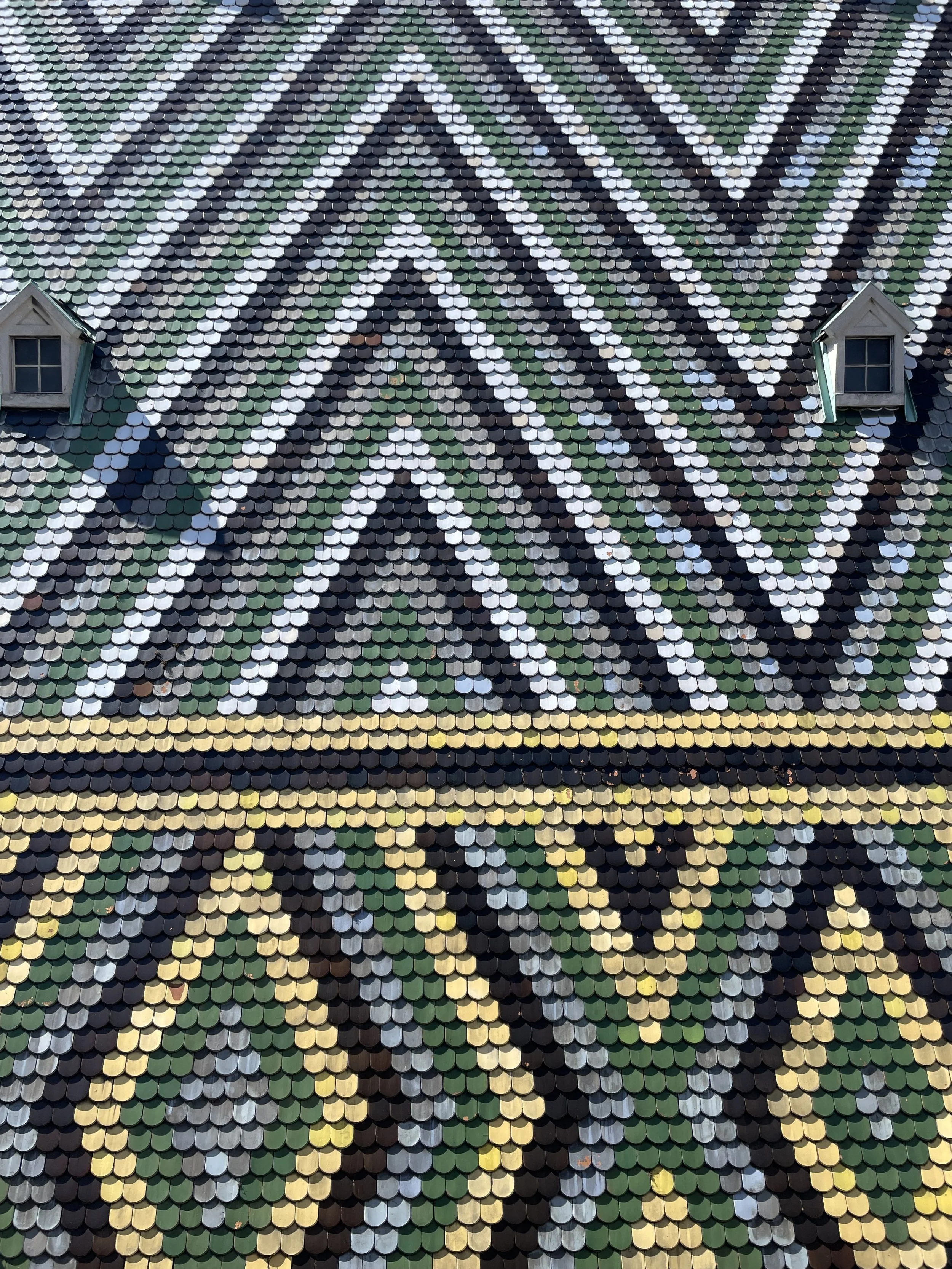
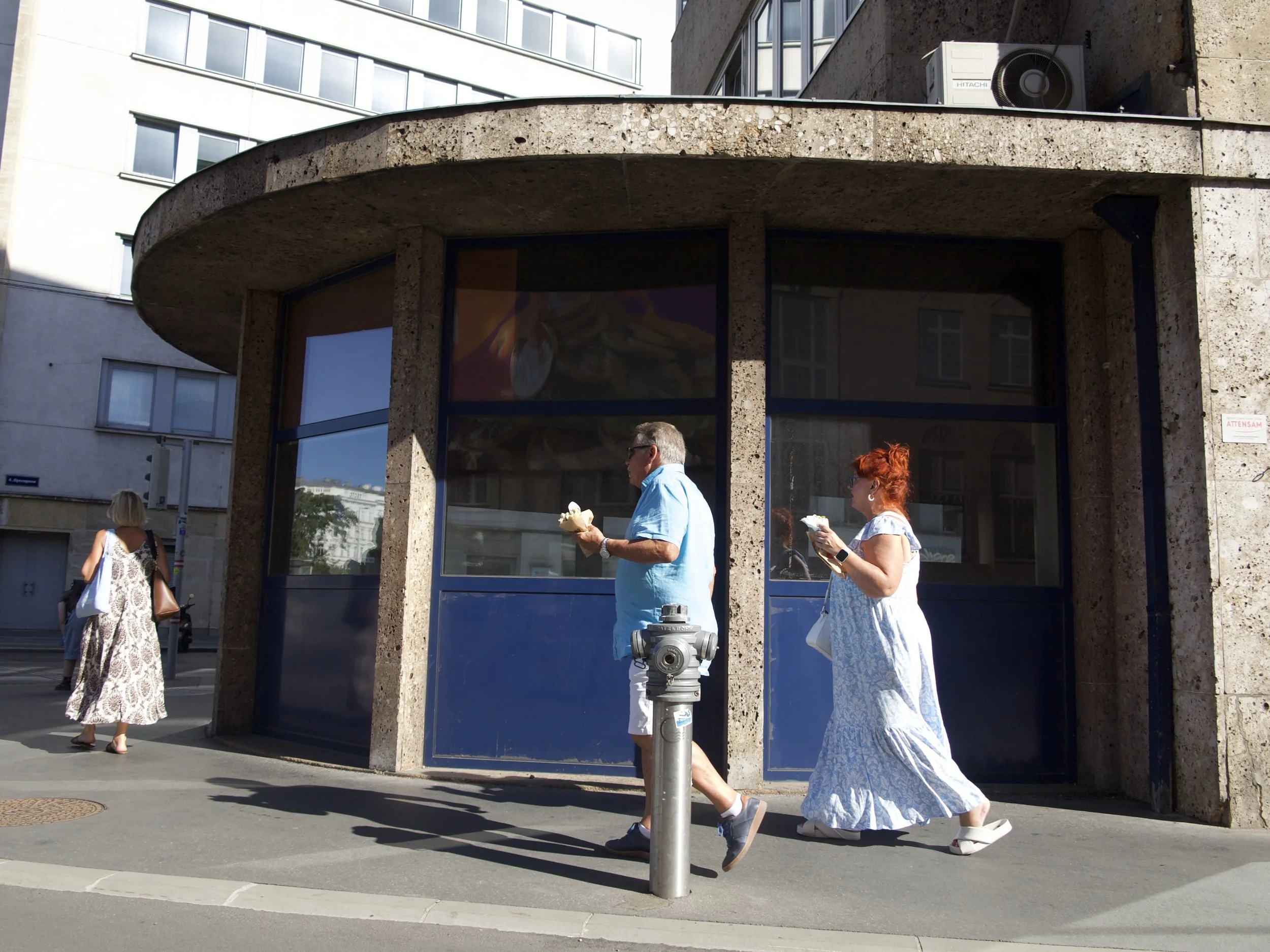
Mi ricordo di avere ancora il telefono in albergo e che, sebbene mi sia fatto la doccia da Misha, indosso ancora i vestiti della notte prima. Lo seguo a distanza. Vienna è calda e, subito dopo pranzo, deserta. Anche i turisti fanno fatica a camminare in queste strade bollenti; dai negozi, i commercianti mi vedono passare davanti alle loro vetrine. L’uomo biondo cammina con passo deciso, come chi conosce la città a memoria. Sale su un tram lungo e con l’aria condizionata, su cui mi fiondo attraverso l'ultima porta un istante prima che si chiuda.
Non si gira mai verso di me. Mi chiedo se sappia che lo sto pedinando: forse sì, e me lo lascia fare? Non so quante fermate facciamo, ma stiamo andando in centro; ci fermiamo nei pressi del Teatro dell'Opera e scendiamo. Dopo pochi minuti siamo nella Cripta dei Cappuccini.
Varcata la soglia dopo aver pagato il biglietto, non lo vedo più. Sparito. Una parete di sarcofagi fiocamente illuminati mi dà il benvenuto, mentre un odore di cera d’api mi investe, misto forse a un po' d'incenso, non so. Poche luci al neon fucsia, verdi e bianche illuminano la cripta.
Cammino tra quei centocinquanta corpi rimasti nella penombra e tra tombe intrise d'una leziosità quasi morbosa, dove ogni traccia di carne è stata irrevocabilmente sigillata dentro enormi sarcofagi di bronzo, rame e peltro che s'impossessano dello spazio con la mole imponente dei monumenti sepolcrali. È un metallo lavorato con un'opulenza rococò così esasperata da scivolare nel gotico, affollato com'è di drappeggi di bronzo che paiono stoffa bagnata dalla pioggia, di angeli a grandezza naturale disperati con le mani a coprirsi il volto, di corone imperiali adagiate su morbidi cuscini di rame sbalzato e di leoni dalle fauci spalancate che sorreggono con sforzo immane i piedi delle tombe; pura materia che si modella come fosse un'illusione, come un'ossatura fatta interamente di zucchero.
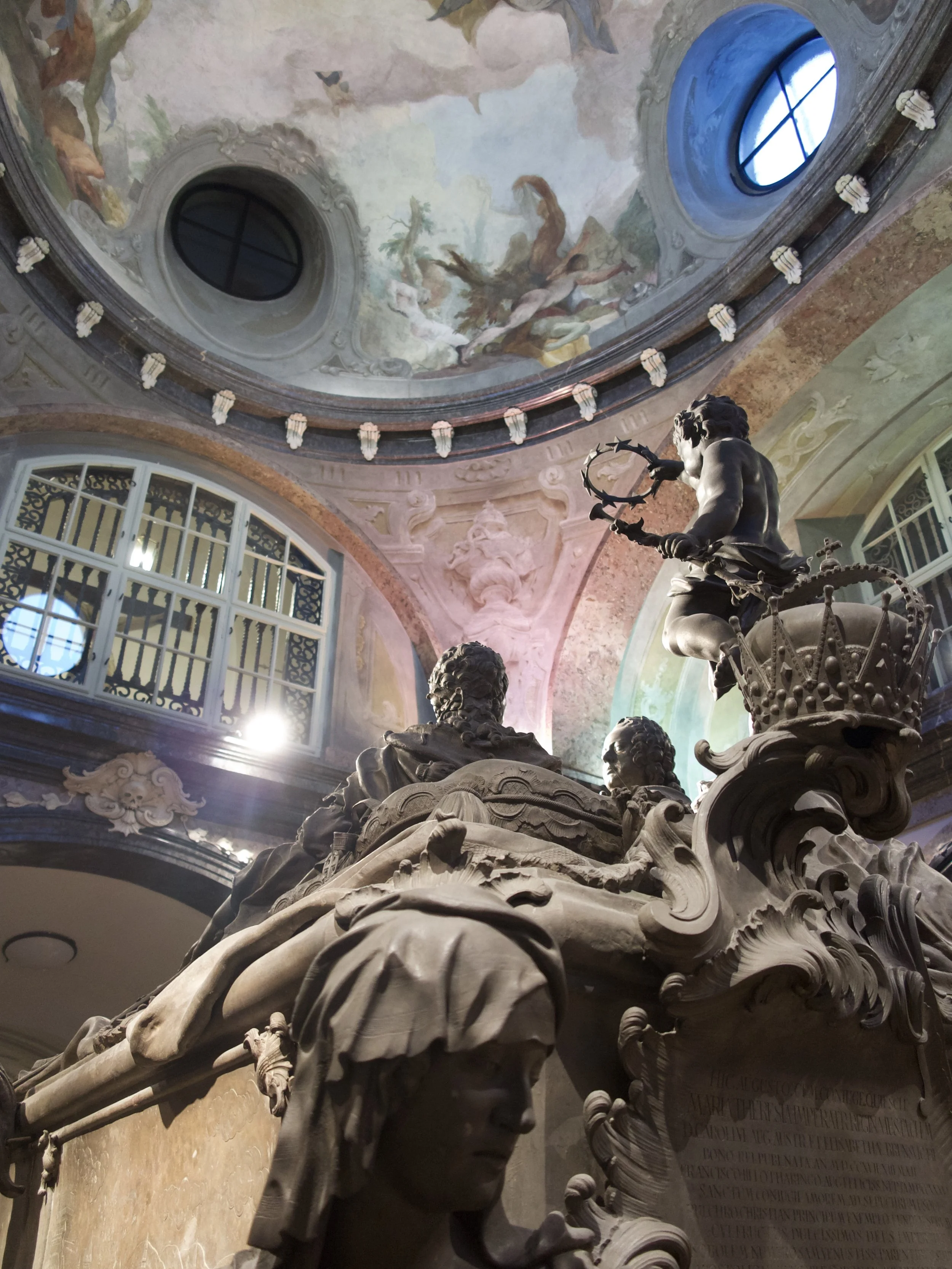
Perfino la tomba di Maria Teresa, che pure si erge a centro nevralgico dell'intera cripta, si presenta come un sarcofago doppio e sovraccarico fino all'eccesso, in cui la regina e il marito vengono sorpresi nell'atto di sollevarsi dal letto di morte per guardarsi un'ultima volta negli occhi, intrappolati in una selva soffocante di sculture, stemmi e allegorie dedicate alla gloria e alla vanità terrena.
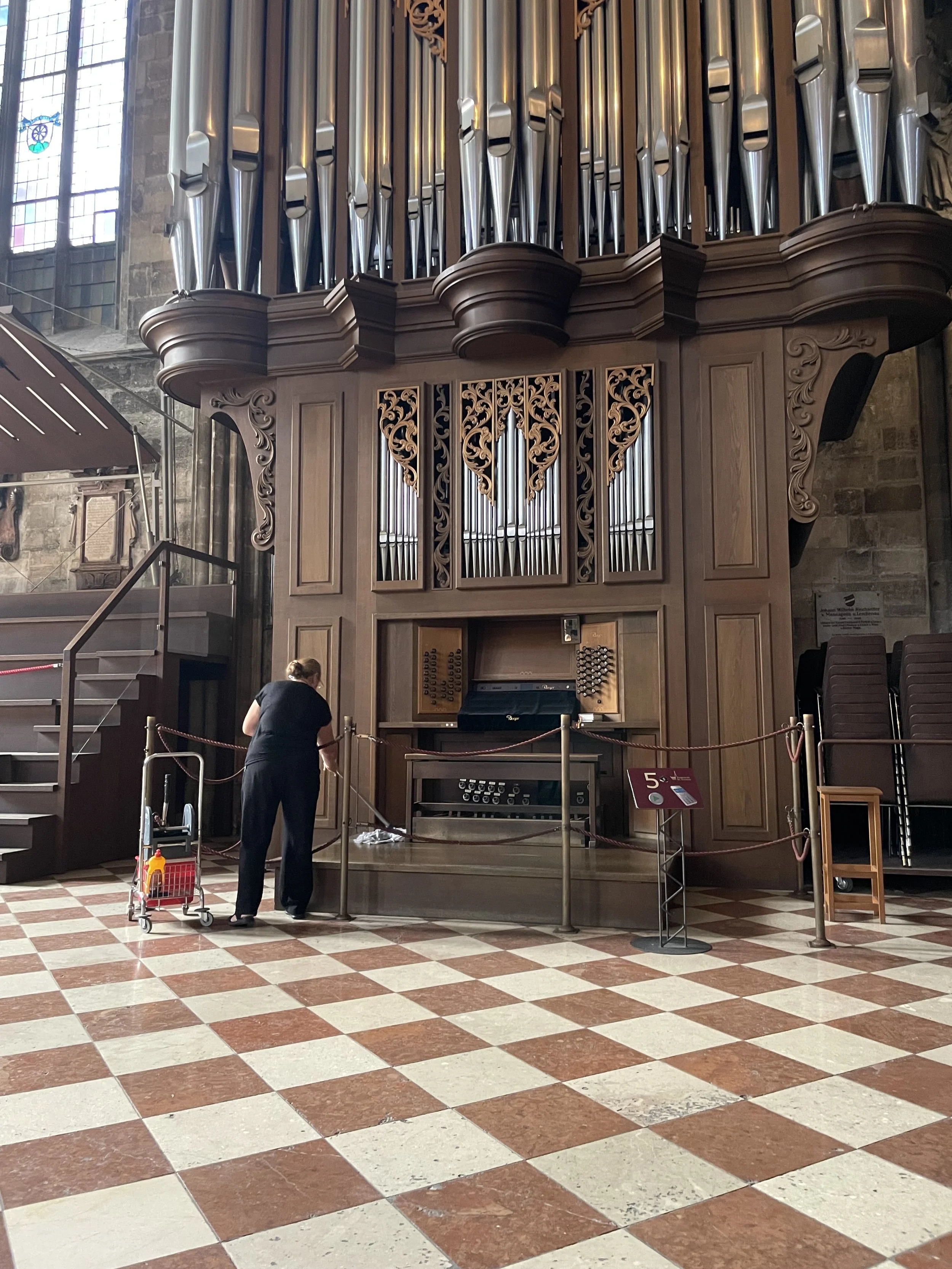
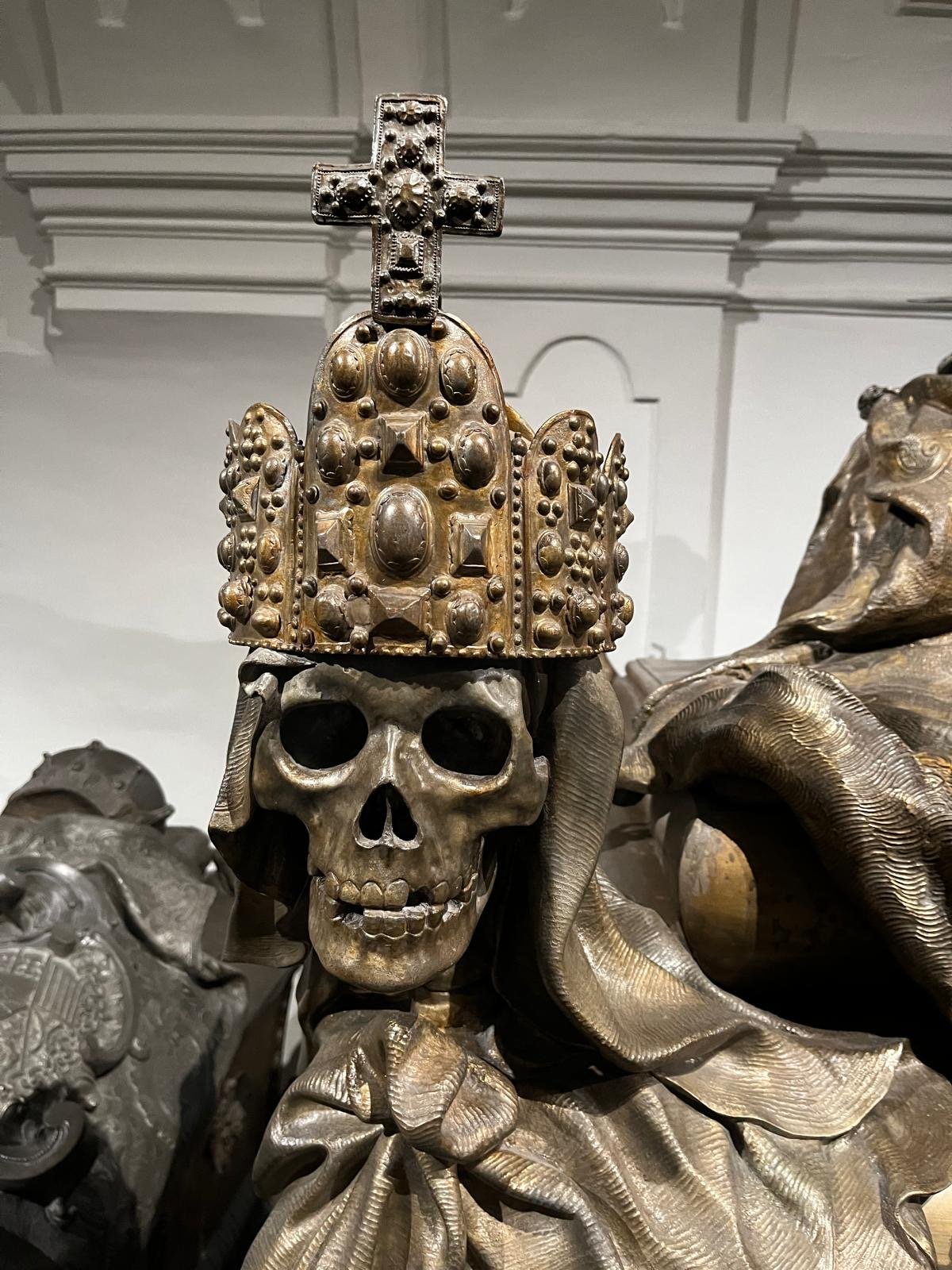
Eppure, in mezzo a questo clangore di metallo e di memoria imperiale, finisco per rimanere completamente imbambolato di fronte a un singolo ornamento scolpito sul sarcofago dell’imperatore Carlo VI: un teschio coronato con le insegne del Sacro Romano Impero che sembra emergere dal buio della storia per fissarmi. Più cerco di distogliere lo sguardo, più mi accorgo di non riuscire a staccarmi da quegli incavi neri, da quei buchi vuoti e profondi che sembrano vibrare di una loro voce sommessa, come se attraverso il metallo stessero tentando di comunicarmi un segreto o come se, al colmo d'una paranoia che mi fa pulsare le tempie, quel teschio pretenda proprio i miei occhi più grossi della media per tornare a vedere il mondo.
Resto immobile per non so quanti secondi, con il respiro sospeso. Il metallo non si muove. L'orbita resta un buco nero di ottone lucido, liscio, privo di fondo.
«Entschuldigung, signore. Stiamo chiudendo».
La custode ha il cartellino plastificato storto sulla giacca e un mazzo di chiavi pesanti in mano. Mi guarda senza rabbia ma con la fretta di chi deve spegnere tutto e andare a casa.
«Sì, arrivo».
Risalgo i gradini di pietra fino alla porta a vetri, lasciandomi alle spalle le centocinquanta tombe degli Asburgo, quelle ossa di zucchero che non custodiscono alcun mistero, o forse sì, ma che non mi è dato sapere. Fuori, il sole delle cinque di pomeriggio picchia dritto sulle vetrine di Kärntner Straße. Cammino verso il centro con i vestiti stropicciati della notte prima e l'odore di pastrami ancora in bocca.
Vienna and the Sugar Charnel House
From the train window, I see the landscape rocket past. I’m heading to Vienna on the night train from Venice, and the sky bleeds into different shades of gray that interlock with one another, rough and pixelated like sandpaper, while behind my back a sunset pours out a high-vis orange. Inside the compartment, I move with the sense that someone—or rather, something—is watching me, but when I turn around, there’s nothing. At the end of the carriage, I notice a staircase that wasn’t there before; when I go up, it’s already dark, and the train’s neon lights are a hospital blue.
In the compartment, I see several figures sitting whom I take for people, even though there’s something off about their faces: eyes that are too large, swollen, drooping lips, shiny skin. They stare at me in their long coats and wide hats, their low, continuous murmur making no sense to me. Their fingers tug at my jacket and arms, and when I try to pull away, I realize there are more of them than I thought. Some have hunchbacked bodies; others retain something human in their features, looking like collages of people I think I know. I try to break free and start flailing blindly, until my hand hits a bottle of wine. I raise it and strike one of the figures on the head; its face deflates like an inflatable rubber doll, only to puff right back up in a single burst. As I watch it regain its shape, I try to scream, but my voice is gone. A female figure tries to choke me—she’s wearing large hoop earrings, her hair is teased high, her mouth wide open to an abyss with no teeth and no tongue.
I wake up with a scream, my heart racing wildly. My God, I’m in my hotel in Vienna, in Weiden. It’s eighty-two degrees outside even though it’s one-thirty in the morning, and I clearly haven't digested the hot dog I ate at the street market. The fact that Austria has turned into an oven unnerves me and keeps me awake, so after tossing and turning for half an hour and aimlessly scrolling Instagram, I throw myself under an ice-cold shower and head out.
Vienna scares me. Ever since I moved back to Italy after so many years abroad, it feels like I always end up in cities trying to tell me something: Turin, Milan, Rome, Verona, Venice, Vienna. They talk to me, but I can’t decipher what they’re saying. With Vienna, I almost get close to understanding, but then I get lost in the dark, murky Viennese night—as if I were in Caracas—and realize I left my phone at the hotel. Absentminded, I’ve always been absentminded: they told me in elementary school, middle school, high school, university, at work.
Wimbergergasse is long and dark when I walk into a sauna with a bar: at the counter, naked men are sipping beers and drinking whisky; the walls are coral pink, and the tropical plants in the corners give the place a distinctly nineties feel. The smell of a locker room hangs in the air, and behind the bar, a man with a veiny nose asks me what I’d like to drink.
“A draft lager, please.”
Take That is playing on the radio, Do What You Like, a very Haçienda track. I jot down on a slip of paper, “check who wrote this, with all those Italo house synths,” using a pen I ask the bartender for.
“Keep it,” he tells me, “we’ve got plenty.” I notice they are the sauna’s own pens, featuring a muscular guy who turns naked and glittery when you flip it around. Classy.
To my right, a neckless man with a towel wrapped around his waist asks me what I’ve seen in Vienna and if I’ve visited Caravaggio’s David with the Head of Goliath at the art museum.
“I’m going tomorrow. I also want to see the twelve Brueghels there.”
His hands are thick and gnarled, his eyes small and dark, making me uncomfortable. I step outside to smoke a cigarette, where I meet a Russian surgeon with a sad voice and a sad look in his eyes. Back in Russia, no one knows he’s gay or where he ran off to: “If my parents found out, they’d send me off to die in the war. I haven't been home in years.” He exudes a almost romantic, English-poet sadness, despite having an athletic build: “I used to play tennis.”
“This is the 12” version of La Vie en Rose,” I manage to say before finishing my beer and getting into an Uber called by Misha—“short for Mikhail”—a little timidly.
I wake up around ten. Misha isn’t there, but he left a note: “Pull the door shut when you leave,” along with his phone number. I get up slowly. The apartment is sparse—few books, not even a TV, an ashtray with a couple of extinguished butts. Even my psychiatrist smokes; I love doctors who don't lecture you. But there are plants, plenty of green ones—companionship, it seems, in a very sober, quiet life. From the apartment window, I can see a Polish restaurant where some men walk in straight and others stumble out. Naturally, I want to go see what it’s all about.
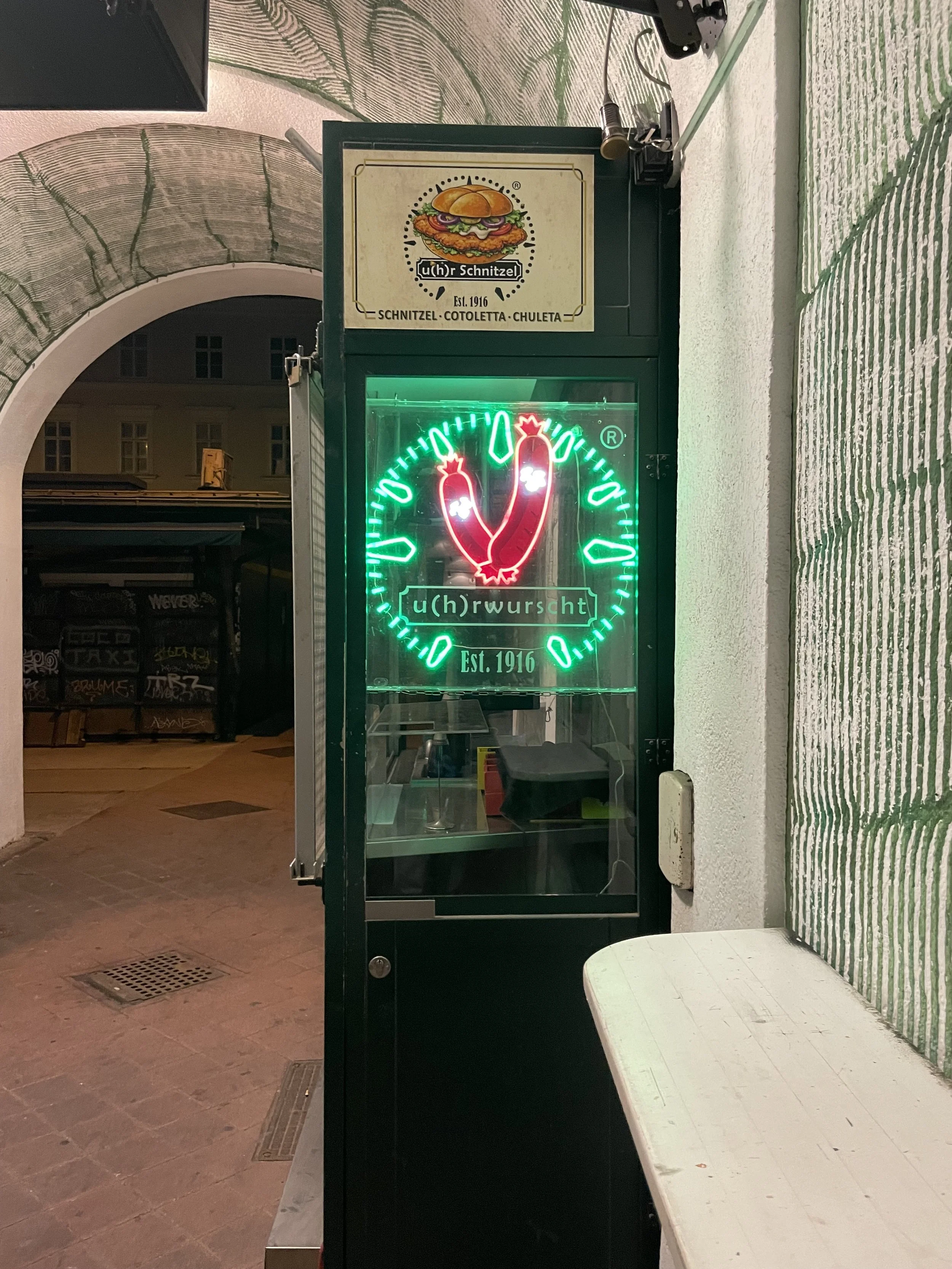
The restaurant is much more modern than I expected: a long light-wood counter at the entrance leads into the dining room, where ugly dental-office fluorescent lights illuminate a squeeze of small tables, flanked by a couple of sad-looking palms in a corner. One wall features a photo mural of yellow New York taxis in the rain and a pixelated, grainy Empire State Building. The host is a short, unpleasant woman with red hair who leaves a pen on the table along with a checklist to mark what you want to order.
I order everything I can: crispy, greasy latkes, a small borscht as a starter, pastrami with pickles, a draft Czech beer. I sweat as I eat, but I don't care: I drank too much yesterday and today I have a hangover appetite. I wonder if I’ll ever see Misha again; I’ll try texting him later. On the other side of the room sits a man, fair-haired, just a bit older than me, with graying hair at his temples and in the beard on his square chin. He has two blue eyes that occasionally lock onto mine. He’s eating pierogi, a basket of them in front of him, smeared with sour cream.
I came to Vienna by train because I can't fly. Apparently, my eyes are larger than normal, and the vitreous body lining them sticks to my retina and tears it. The doctor told me not to fly and to wait until he gets back from vacation so he can operate. How nice. Ever since I found out, I’ve been obsessed with other people's eyes. I wonder if the blonde man’s eyes are big inside his head too: he looks like a Schönberg painting, all subtle gradients and just two blue eyes chewing and staring at me. On the radio, they’re playing a German hip-hop track I hear every time I cross Austria or Germany. I don't know if it's the only hip-hop track the Germans have ever written or the most famous one in Germanic history. I just have time to swallow my last sip of beer before the man pays, barely turns around as he leaves, and leaves the restaurant door open. I decide to follow him.
I remember my phone is still at the hotel, and that even though I took a shower at Misha's place, I’m still wearing last night's clothes. I trail him at a distance. Vienna is hot and, right after lunch, deserted. Even the tourists struggle to walk through these scorching streets; shopkeepers watch me pass from behind their windows. The blonde man walks with a purposeful stride, like someone who knows the city by heart. He boards a long, air-conditioned tram, and I dive through the last door a second before it closes.
He never turns to look at me. I wonder if he knows I’m tailing him—maybe he does, and he’s letting me? I lose count of the stops, but we’re heading toward the city center. We pull up near the Opera House and get off. A few minutes later, we’re inside the Imperial Crypt.
Once I cross the threshold after paying for my ticket, he’s gone. Vanished. A wall of dimly lit sarcophagi greets me, as a smell of beeswax washes over me, mixed perhaps with a bit of incense, I’m not sure. A few pink, green, and white neon lights illuminate the crypt.
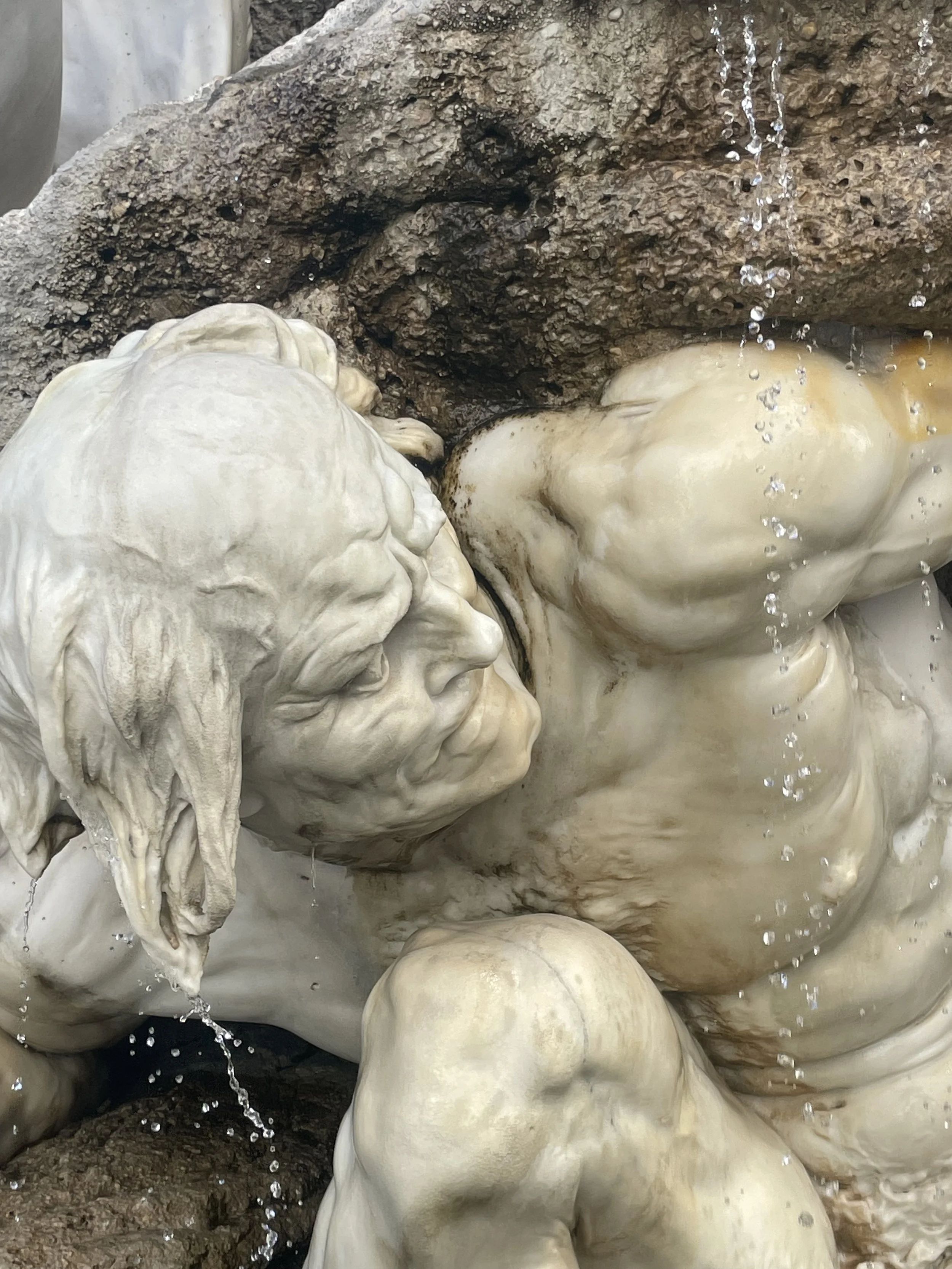
I walk among those hundred and fifty bodies lying in the twilight, amidst tombs steeped in an almost morbid delicacy, where every trace of flesh has been irrevocably sealed inside enormous sarcophagi of bronze, copper, and pewter. They overpower the space with the imposing weight of sepulchral monuments. The metal is worked with a Rococo opulence so extreme it almost slips into the Gothic—crowded as it is with bronze drapery that looks like rain-soaked cloth, full-length figures of desperate angels hiding their faces in their hands, imperial crowns resting on soft cushions of chased copper, and gaping-jawed lions straining under the immense effort of holding up the bases of the tombs: pure matter molded as if it were an illusion, an entire skeleton made of sugar. Even the tomb of Maria Theresa—standing as the monumental, neuralgic center of the whole crypt—presents itself as a double, hopelessly overburdened sarcophagus, where the queen and her husband are caught rising from their deathbed to look into each other's eyes one last time, trapped in a suffocating forest of sculptures, coats of arms, and allegories dedicated to earthly glory and vanity.
And yet, amid this clamor of metal and imperial memory, I end up standing completely spellbound before a single ornament carved onto the sarcophagus of Emperor Charles VI: a crowned skull bearing the insignia of the Holy Roman Empire, appearing to emerge from the darkness of history to stare right at me. The more I try to look away, the more I realize I can’t tear myself away from those black sockets, those deep, empty holes that seem to vibrate with a quiet voice of their own—as if through the metal they were trying to communicate an unencoded secret to me, or as if, at the height of a paranoia that makes my temples throb, that skull were demanding my larger-than-average eyes just to see the world again.
I stand motionless for I don't know how many seconds, holding my breath. The metal doesn't move. The socket remains a black hole of polished brass—smooth, bottomless.
“Entschuldigung, sir. We’re closing.”
The female attendant’s plastic name tag is crooked on her jacket, and she holds a heavy ring of keys in her hand. She looks at me without anger, just with the quiet urgency of someone who needs to turn off the lights of a basement floor.
“Yes, I’m coming.”
I reach into my pocket and my fingers find only the plastic sauna pen. I pull it out for a second: under te green neon light of the crypt, the naked, glittery guy shines against a coral-pink background, squeezed between the sarcophagus of a Holy Roman Emperor and a woman waiting for me to get out of her way.
I walk back up the stone steps to the glass doors, leaving behind the hundred and fifty Habsburg tombs—those sugar bones that guard no mystery, or perhaps they do, but it isn't mine to know. Outside, the five o’clock afternoon sun beats straight down onto the shopfronts of Kärntner Straße. I walk toward the center, surrounded by people holding ice creams, wearing last night’s crumpled clothes, the taste of pastrami still in my mouth.