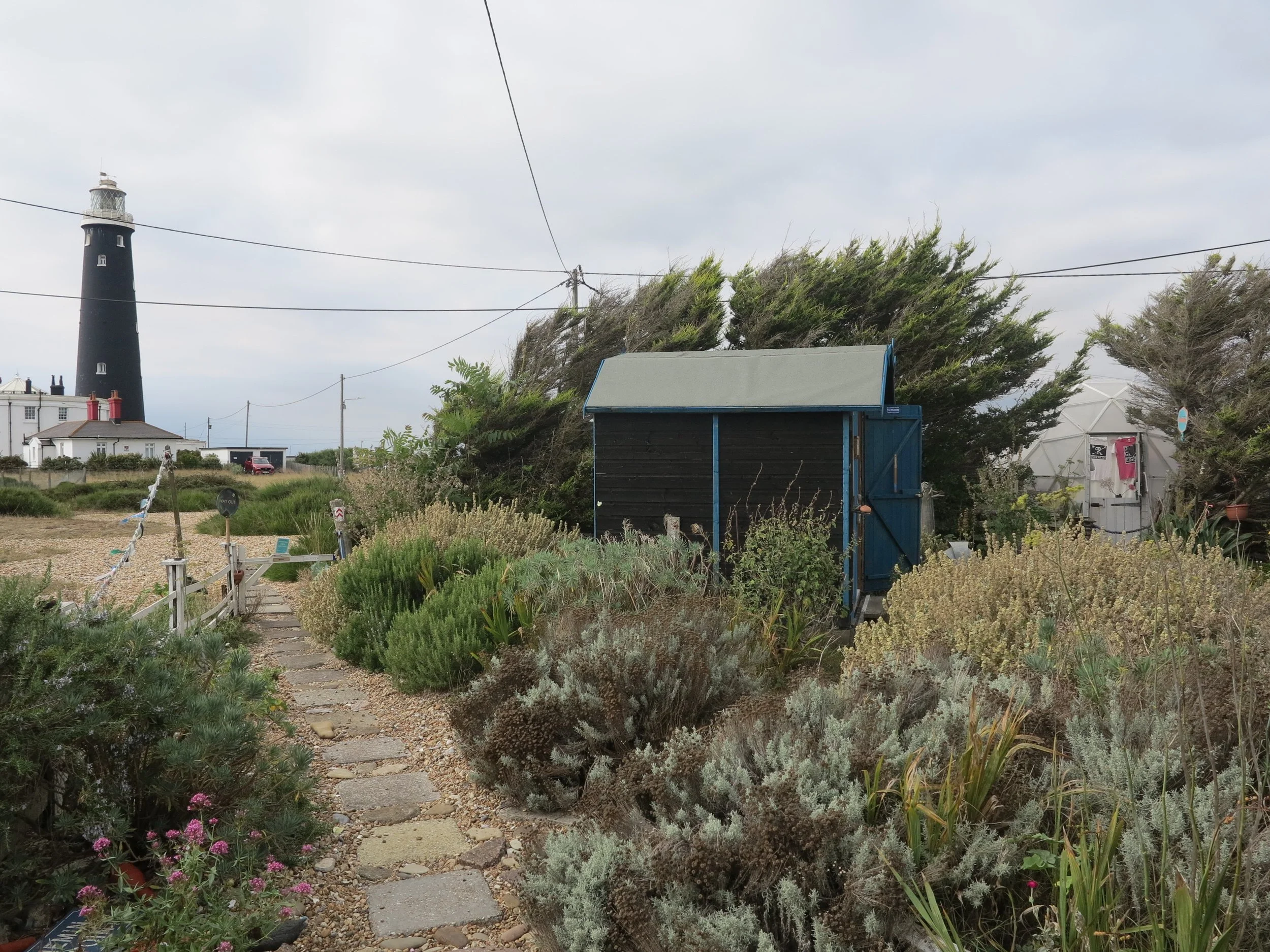
Dungeness val bene una pinta
La password del wi-fi del Britannia Inn era “the world end”: la fine del mondo. Certo, c’erano dettagli che purtroppo mi riportavano alla realtà, come il fatto stesso che esistesse un wi-fi in un pub e che ci fossero turisti come me, persone che probabilmente non avrebbero dovuto essere lì. Eppure quel luogo sembrava davvero trovarsi alla fine del mondo, o almeno così doveva essere sembrato a chi per primo arrivò qui, in questa striscia di terra tra il mare e il nulla che gli abitanti chiamano semplicemente Dungeness.
Ero arrivato fin lì per vedere la casa di Derek Jarman, il regista di Caravaggio e Wittgenstein, che negli ultimi anni della sua vita aveva scelto questo paesaggio alieno come rifugio e laboratorio creativo. Ma più che una casa, cercavo forse una traccia: il segno lasciato da un artista in un luogo dove apparentemente non c’era nulla da lasciare. E l’avevo trovato nel suo giardino brullo, fatto di piante resistenti al sale, al vento e al mare.
Il pub era a tema marinaro, come molti locali sulle coste del Regno Unito, ma proprio come la natura fuori dalle finestre a forma di oblò anche l’interno era asciutto, spartano, quasi vuoto: pochi tavoli di legno dipinti di azzurro con sgabelli leggermente troppo bassi e scomodi, un bancone con una selezione di birre alla spina e poco altro appeso alle pareti: un tirassegno, un paio di salvagenti e, su una parete, la bandiera inglese.
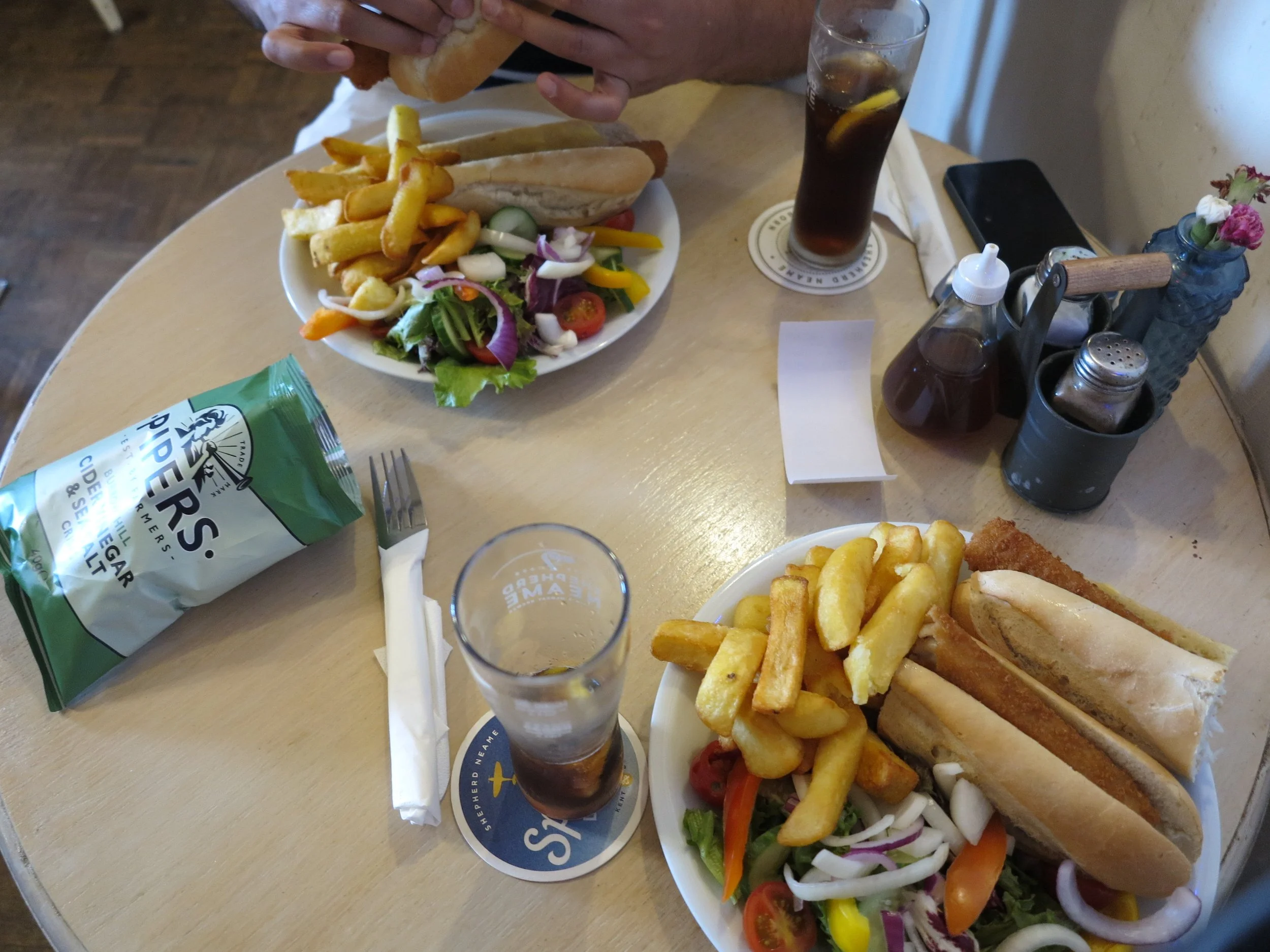
Avevo ordinato un panino con i fish finger - i bastoncini di pesce - zeppi di salsa tartara, qualche gemma di lattuga e patate al forno croccanti e acetose. Un classico della costa inglese, un cibo senza pretese che sembrava appartenere più al paesaggio che al menù, ma che come tutti i cibi da marinai sazia e costa poco.
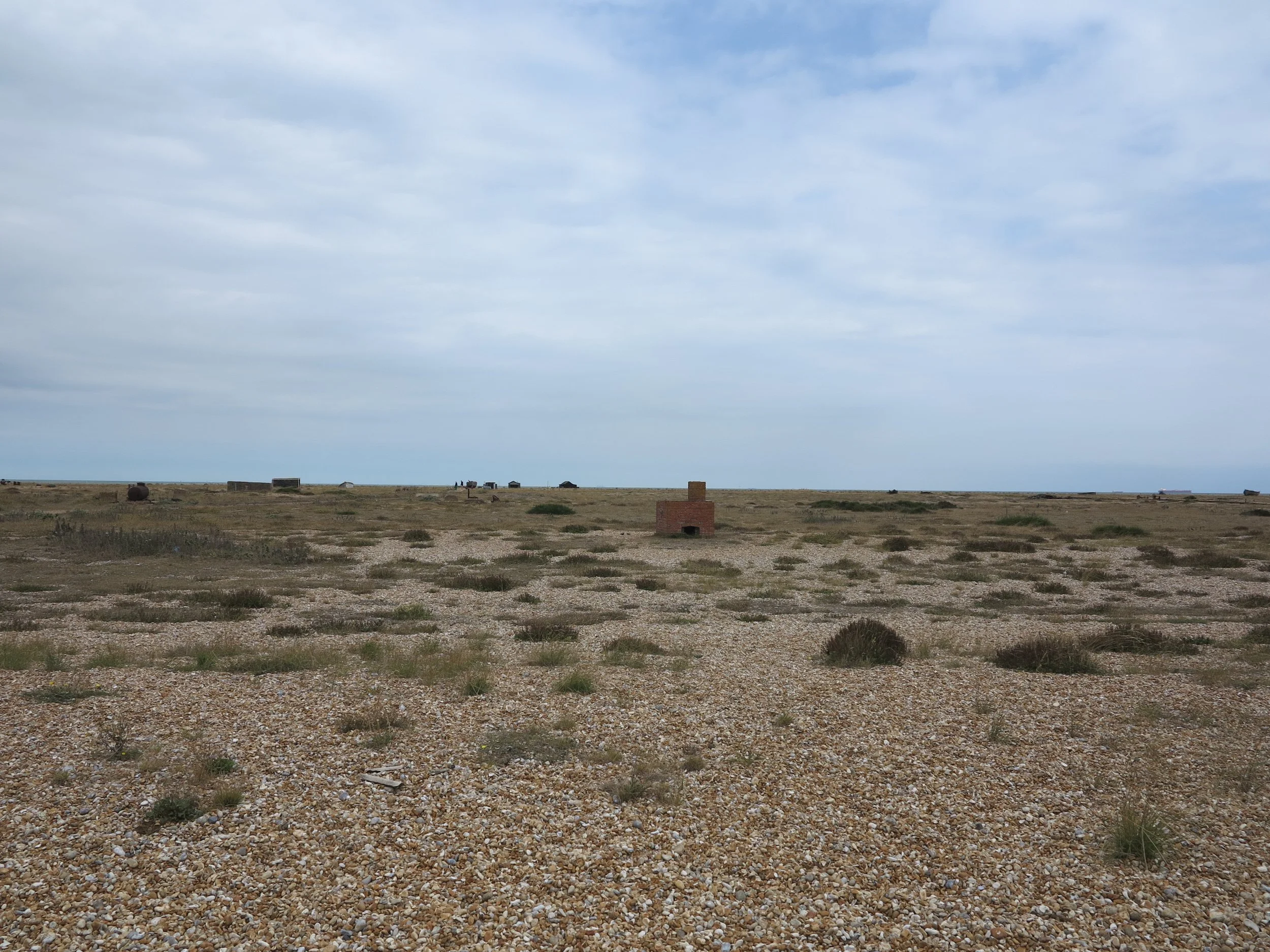
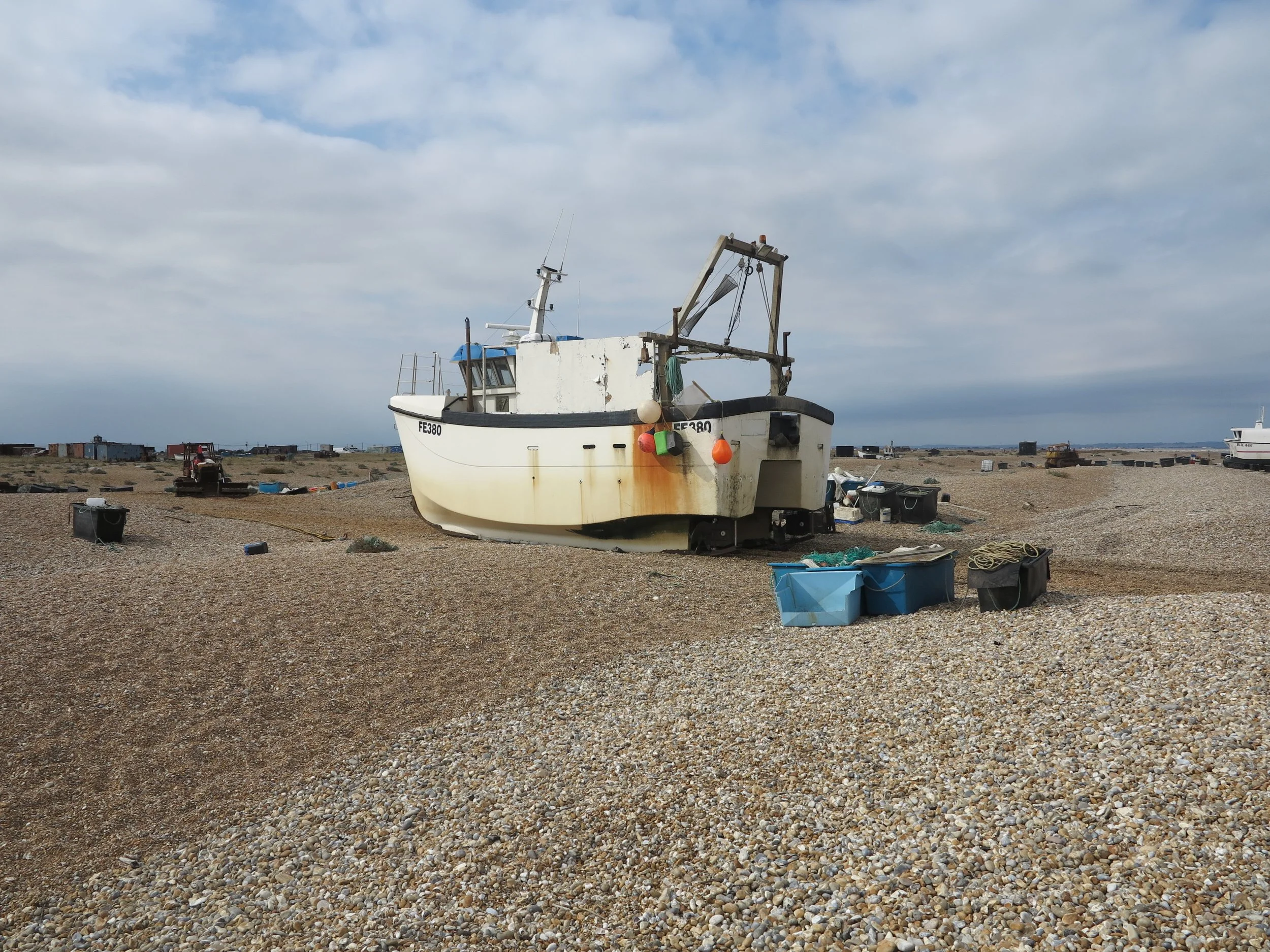
Me lo ero portato sulla spiaggia, se spiaggia si possono chiamare quelle distese apocalittiche di sassi e ghiaia dove, come relitti di un mondo estinto, vecchie barche arrugginite sono rimaste incastrate tra le dune.
A Dungeness il vento non smette mai davvero di soffiare, tanto che non credo esista un giorno completamente privo di vento in questo angolo di Inghilterra. La schiuma della birra si sollevava dal bicchiere e mi finiva sul viso, mentre cercavo di mangiare il panino proteggendolo dalle raffiche. Eppure era buonissimo: il pesce fritto, la salsa tartara, la baguette morbida (la Francia è laggiù in fondo oltre il mare) e il sale nell’aria si mescolavano in un sapore che sembrava appartenere esattamente a quel luogo.
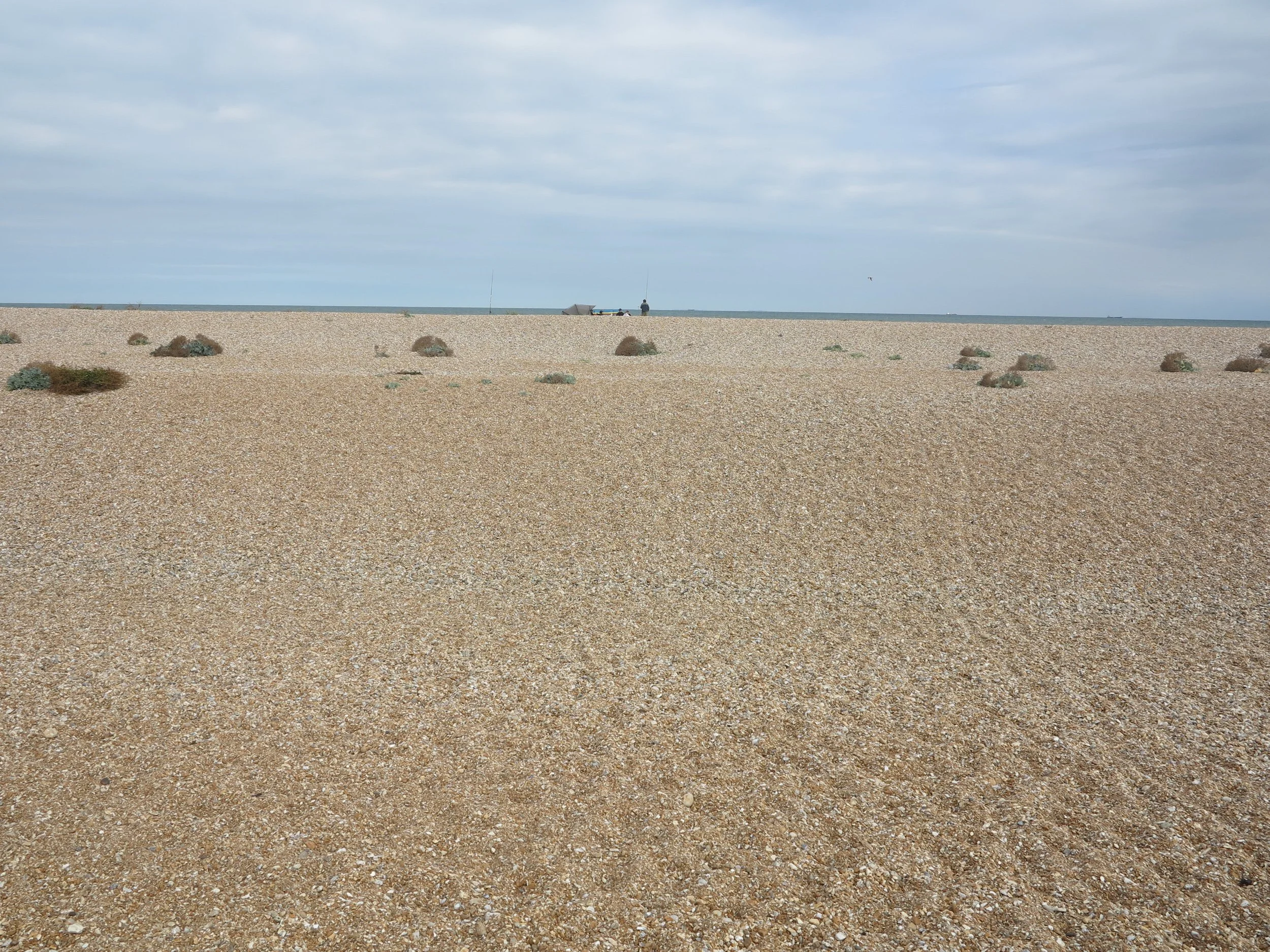
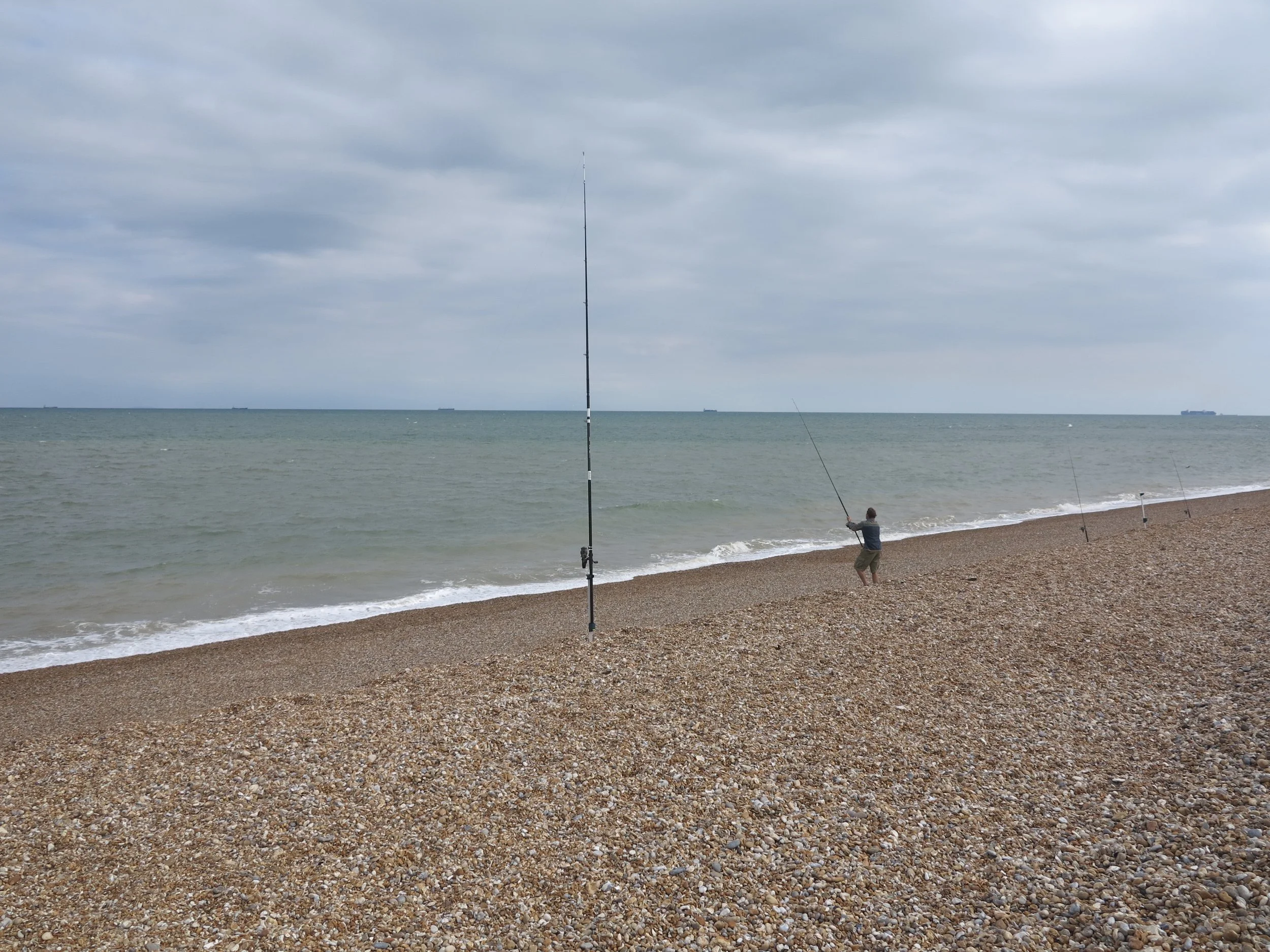
Seduto accanto a una barca dalla vernice scrostata, con il legno consumato dal mare e dal vento, guardavo un uomo pescare sulla riva. Per un momento tutto sembrava sospeso: la barca che non navigava più, il pescatore che continuava a lanciare la lenza, io con una birra in mano e un panino mangiato alla fine del mondo: poteva essere il 1986, il 2006, il 2026, tanto tutto lì era immobile e straniante.
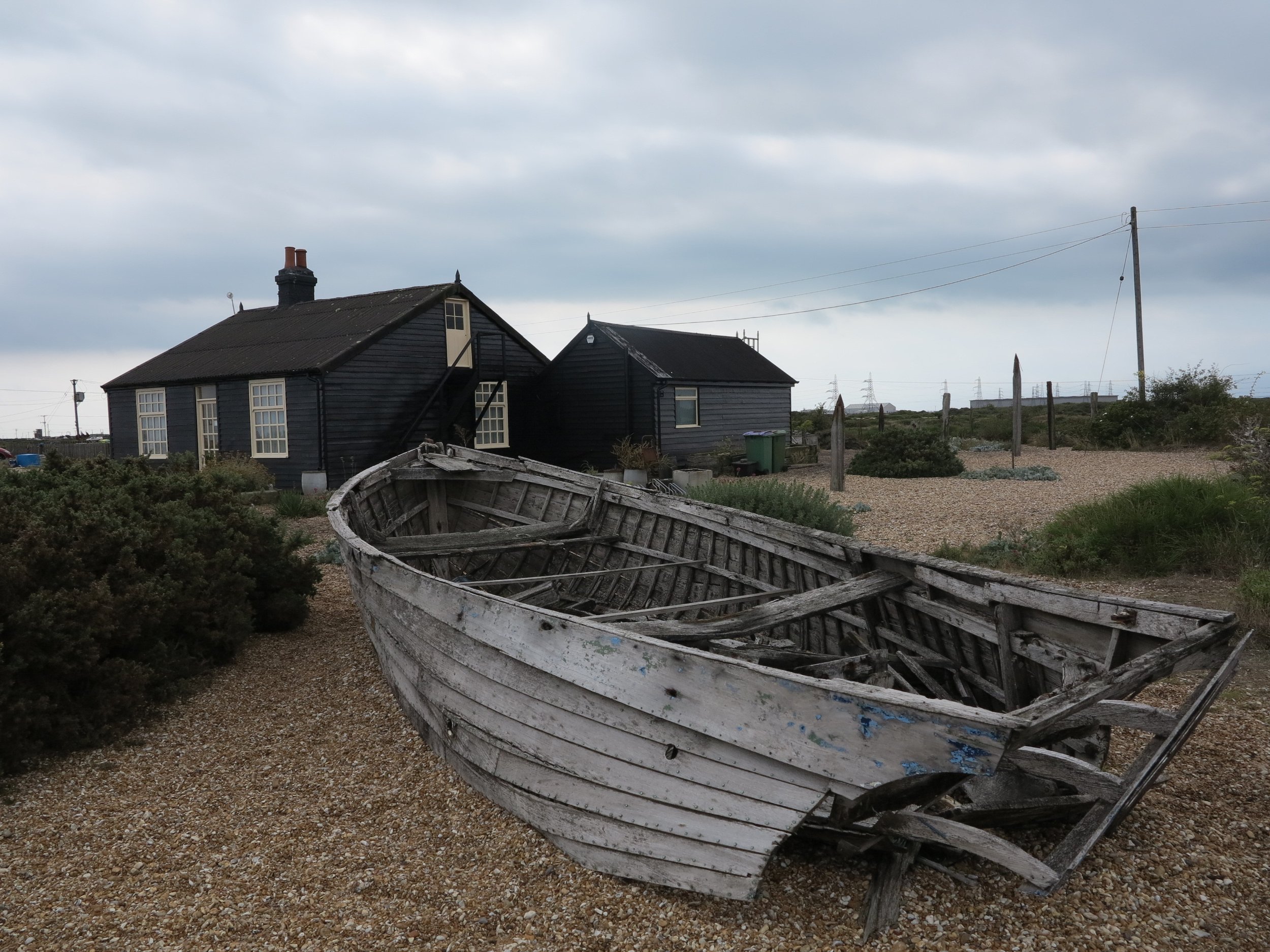
Era proprio qui, tra queste pietre e queste barche abbandonate, che Derek Jarman aveva deciso di passare gli ultimi anni della sua vita. Nel 1986, poco dopo aver scoperto di essere sieropositivo in un’epoca in cui l’HIV era ancora circondato da paura, ignoranza e condanna sociale, il regista aveva acquistato una piccola casa di pescatori, una costruzione nera con le finestre gialle che sembrava quasi un oggetto estraneo in mezzo a questo paesaggio senza riparo. La casa si chiamava Prospect Cottage e sarebbe diventata molto più di un rifugio: negli anni in cui la malattia avanzava, mentre molti dei suoi amici morivano per quella stessa epidemia che aveva colpito un’intera generazione, Jarman iniziò a scavare nella ghiaia e nel terreno impossibile di Dungeness per creare un giardino. Un gesto apparentemente assurdo: piantare rose, lavanda e fiori in un luogo battuto dal vento, dove persino gli alberi sembravano avere difficoltà a sopravvivere. Ma forse proprio per questo quel giardino aveva senso. Non era un tentativo di vincere contro la natura, ma di dichiarare la propria presenza dentro un paesaggio che sembrava già appartenere al futuro. Nel suo diario Modern Nature, Jarman scriveva del giardino come di un luogo di memoria e amore, costruito con piante, pietre, legni portati dal mare e oggetti trovati sulla spiaggia.
Jarman morì nel 1994, a soli 52 anni, e Prospect Cottage è rimasto lì, affacciato sul mare e sul nulla, proprio come il suo ultimo grande capolavoro, Blue: un’opera che non raccontava la malattia attraverso immagini, ma attraverso l’assenza delle immagini stesse, un’unica distesa di blu che diventava memoria, perdita e resistenza. La casa di Dungeness è ancora oggi un memento mori, certo, ma anche una traccia concreta di ciò che l’epidemia di HIV ha significato per un’intera generazione di artisti: vite interrotte troppo presto, opere rimaste a parlare al posto di persone che non hanno avuto il tempo di invecchiare.
Avrei provato una sensazione simile qualche tempo dopo, visitando la mostra dedicata agli artisti italiani scomparsi a causa dell’AIDS alla Fondazione Pecci di Prato. Camminando tra le opere e leggendo le targhe con le date di nascita e di morte, sarei rimasto sorpreso dalla distanza brevissima tra quei due numeri. Molti di quegli artisti avevano poco più di vent’anni, o appena superato i trenta quando erano scomparsi, lasciandosi dietro alcune opere d’arte meravigliose a cui non abbiamo potuto vedere un seguito.
Pensavo a quelle vite interrotte e mi sembrava che ci fosse qualcosa di simile anche nel modo in cui oggi guardiamo al futuro del pianeta: la sensazione di vivere dentro una trasformazione più grande di noi, che non abbiamo scelto e che dovremo comunque attraversare, anche se sappiamo già che avrà conseguenze profonde.
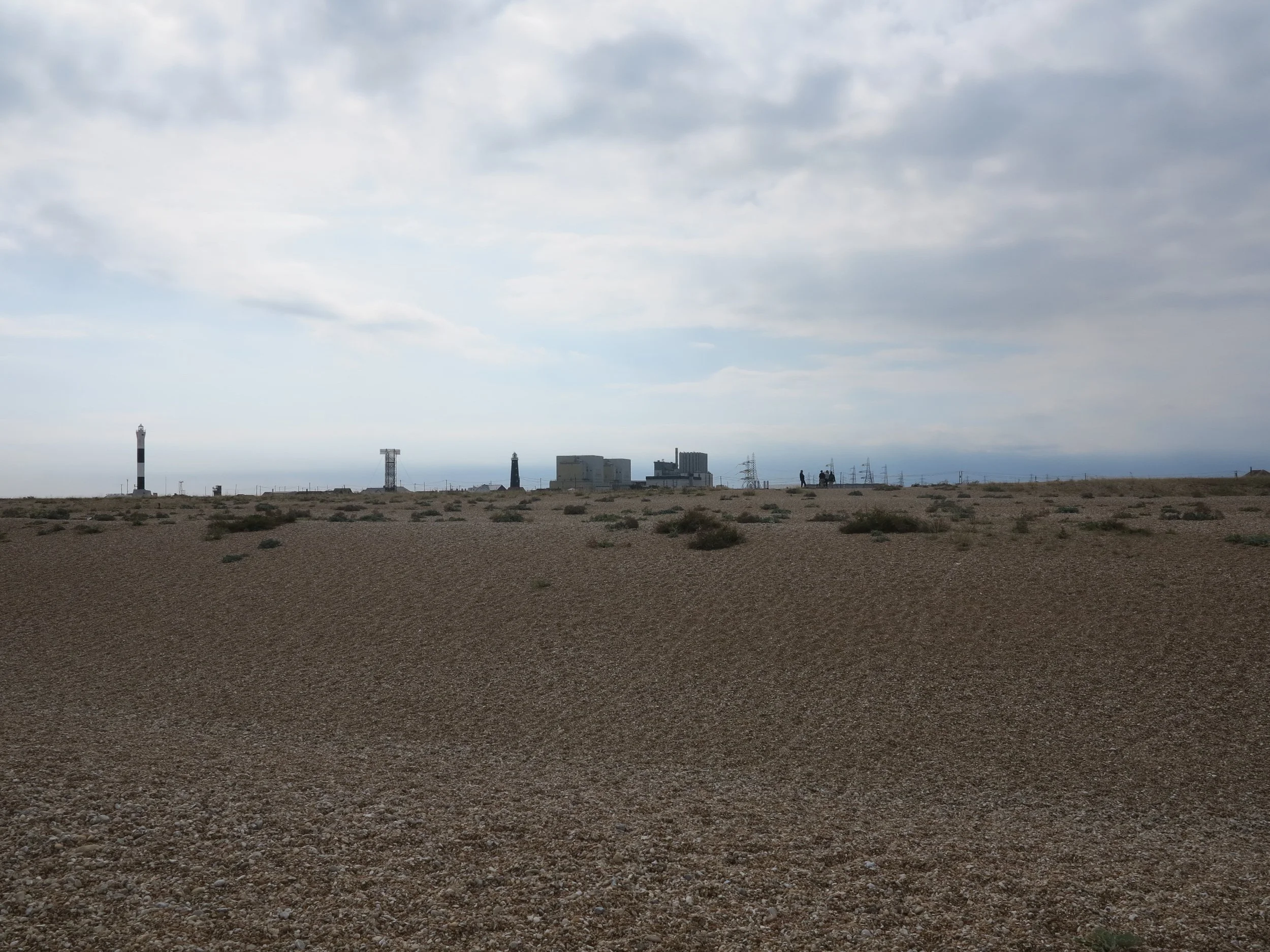
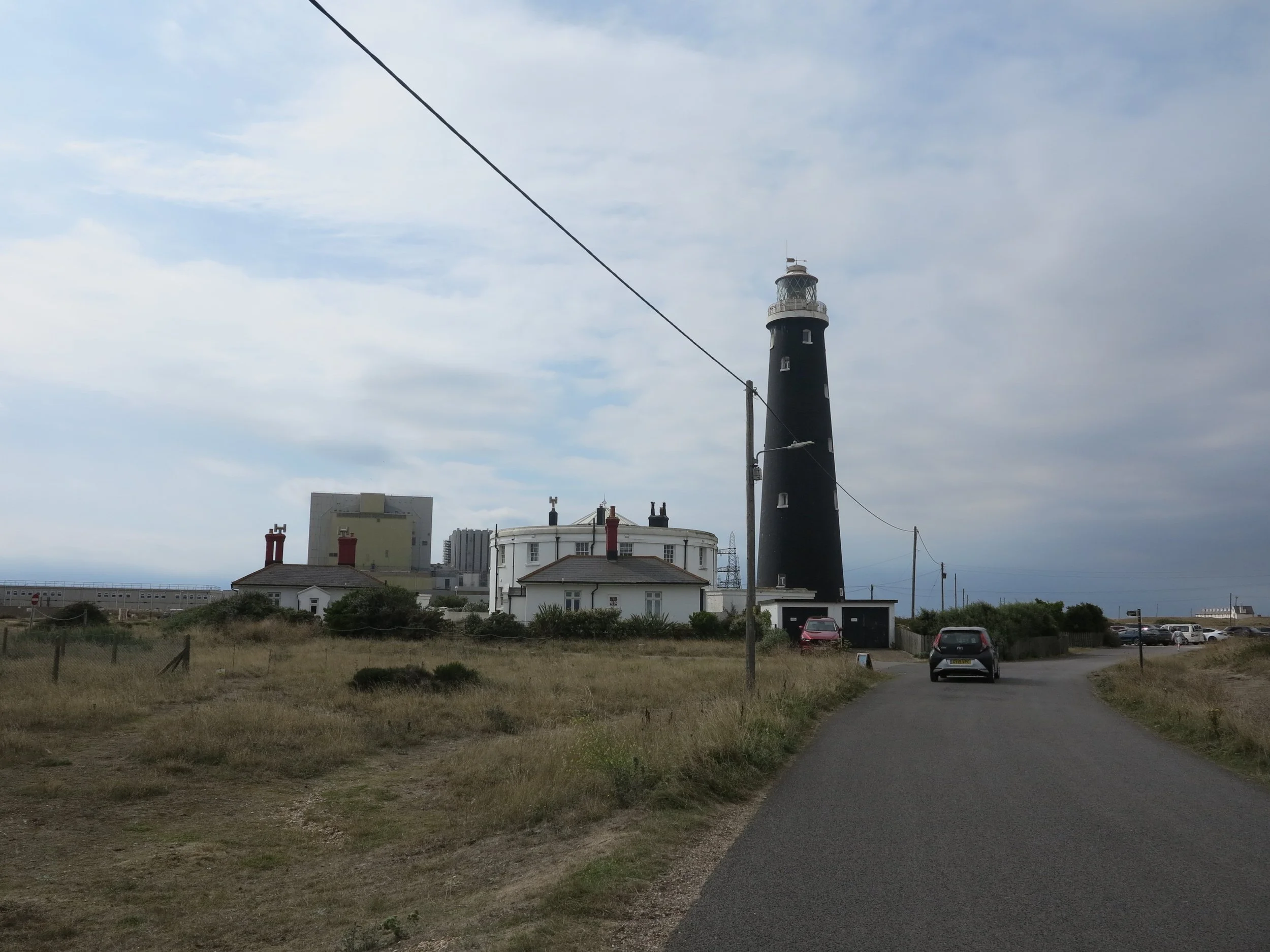
Guardando Dungeness è facile pensare all’apocalisse, ma non quella spettacolare dei film, fatta di esplosioni e città in fiamme, ma una fine più silenziosa, in cui pochi sopravvissuti si muovono timidamente tra le rovine di un mondo che non appartiene più agli esseri umani. A contribuire a questa sensazione c’è la presenza della vecchia centrale nucleare, con la sua sagoma scura che domina il paesaggio, ma anche tutto il resto: le automobili arrugginite abbandonate vicino alle case, gli edifici consumati dal vento, le piante piegate dalla salsedine, i sassi giallastri della spiaggia, un faro nero che domina il paesaggio.
Eppure, stranamente, non c’era angoscia in quella visione della fine che mi baluginava di fronte agli occhi mentre bevevo una terza pinta di ALE. Seduto davanti al mare pensavo piuttosto a un futuro in cui, dopo secoli di consumo e occupazione, la terra avrebbe lentamente ripreso possesso dei propri spazi. Non una vendetta della natura, ma semplicemente un ritorno all’equilibrio: noi lasciati indietro, insieme alle nostre case, alle nostre strade e alle nostre pretese di dominio, ai miei dischi e ai miei libri - manco un film io avevo fatto. Ero pacifico nell’immaginare questa apocalisse, un mondo ridotto all’essenziale, abitato da pochi esseri che non avrebbero avuto bisogno di inventarsi un futuro perché semplicemente avrebbero continuato a vivere. Forse il riscaldamento globale sta scaldando anche gli animi, oltre ai mari e ai cieli: negli ultimi anni ho avuto spesso la sensazione di vivere in un mondo più rumoroso, più nervoso, più arrabbiato. Invece, quel paesaggio vuoto e silenzioso, spazzato dal vento, aveva qualcosa di rassicurante; era anche un futuro in cui non avrei dovuto angosciarmi per cercare un lavoro, né assistere ogni giorno allo spettacolo paradossale di persone premiate per la loro incompetenza, mentre altre cercano faticosamente un posto nel mondo.
Certo, c’era anche un piccolo problema: in quel futuro senza esseri umani non avrei potuto ordinare una quarta birra, questa volta una Guinness, immancabile in un buon pub inglese.
Dungeness Is Worth a Pint
The Wi-Fi password at the Britannia Inn was “the world end”: the end of the world. Of course, there were details that unfortunately brought me back to reality, such as the fact that there was Wi-Fi in a pub at all, and that there were tourists like me, people who probably had no business being there. And yet that place really did feel like the end of the world, or at least that was how it must have seemed to the first people who arrived here, on this strip of land between the sea and nothingness that locals simply call Dungeness.
I had travelled there to see Derek Jarman’s house, the home of the director of Caravaggio and Wittgenstein, who in the final years of his life chose this alien landscape as both refuge and creative laboratory. But more than a house, perhaps I was looking for a trace: the mark left by an artist in a place where, at first glance, there seemed to be nothing to leave a mark on. And I found it in his barren garden, made of plants resistant to salt, wind and sea.
The pub had a nautical theme, like many places along the British coast, but just like the nature outside its porthole-shaped windows, the interior was dry, austere, almost empty: a few wooden tables painted blue, with stools that were slightly too low and uncomfortable, a bar with a selection of beers on tap, and very little hanging on the walls: a dartboard, a couple of life rings and, on one wall, the English flag.
I ordered a fish finger sandwich — battered fish sticks — covered in tartare sauce, with a few leaves of gem lettuce and crispy, vinegary roast potatoes. A classic of the English coast, an unpretentious food that seemed to belong more to the landscape than to the menu, but which, like all sailors’ food, fills you up and doesn’t cost much.
I carried it down to the beach, if one can call a beach those apocalyptic stretches of stones and gravel where, like wrecks from an extinct world, old rusting boats remain stranded among the dunes.
In Dungeness the wind never really stops blowing. I doubt there is a single completely windless day in this corner of England. The foam from my beer lifted from the glass and landed on my face as I tried to eat the sandwich while protecting it from the gusts. And yet it was delicious: the fried fish, the tartare sauce, the soft baguette (France lies just beyond the sea) and the salt in the air blended together into a flavour that seemed to belong exactly to that place.
Sitting beside a boat with peeling paint, its wood eaten away by the sea and the wind, I watched a man fishing from the shore. For a moment everything seemed suspended: the boat that no longer sailed, the fisherman who continued to cast his line, me with a beer in my hand and a sandwich eaten at the end of the world. It could have been 1986, 2006, or 2026; everything there felt still and strangely detached from time.
It was here, among these stones and abandoned boats, that Derek Jarman had decided to spend the final years of his life. In 1986, shortly after discovering that he was HIV positive, at a time when HIV was still surrounded by fear, ignorance and social condemnation, the director bought a small fisherman’s cottage, a black building with yellow windows that looked almost like a foreign object in this exposed landscape.
The house was called Prospect Cottage, and it would become much more than a refuge. During the years when his illness progressed, while many of his friends died from the same epidemic that had devastated an entire generation, Jarman began digging into the gravel and impossible soil of Dungeness to create a garden. An apparently absurd gesture: planting roses, lavender and flowers in a place battered by wind, where even trees seemed to struggle to survive.
But perhaps that was exactly why the garden made sense. It was not an attempt to defeat nature, but a way of declaring his own presence within a landscape that already seemed to belong to the future. In his diary Modern Nature, Jarman described the garden as a place of memory and love, built from plants, stones, driftwood and objects found along the shore.
Jarman died in 1994, aged only 52, and Prospect Cottage remains there, facing the sea and the emptiness, just like his final great masterpiece, Blue: a work that did not describe illness through images, but through the absence of images themselves, a single field of blue that became memory, loss and resistance.
The house in Dungeness is still a memento mori, certainly, but also a concrete reminder of what the HIV epidemic meant for an entire generation of artists: lives interrupted too soon, works left behind to speak in place of people who never had the chance to grow old.
I experienced a similar feeling some time later, visiting an exhibition at the Pecci Centre in Prato dedicated to Italian artists who had died of AIDS. Walking among the works and reading the plaques with their dates of birth and death, I was struck by the painfully short distance between those two numbers. Many of those artists were barely in their twenties, or had only just entered their thirties when they died, leaving behind extraordinary works of art whose continuation we would never see.
I thought about those interrupted lives and felt there was something similar in the way we now look at the future of the planet: the sensation of living through a transformation much larger than ourselves, something we did not choose but must nevertheless endure, knowing that we will emerge from it having paid a heavy price.
Looking at Dungeness, it is easy to think of the apocalypse — but not the spectacular kind shown in films, made of explosions and burning cities. Rather, a quieter ending, where a few survivors move cautiously among the ruins of a world that no longer belongs to human beings.
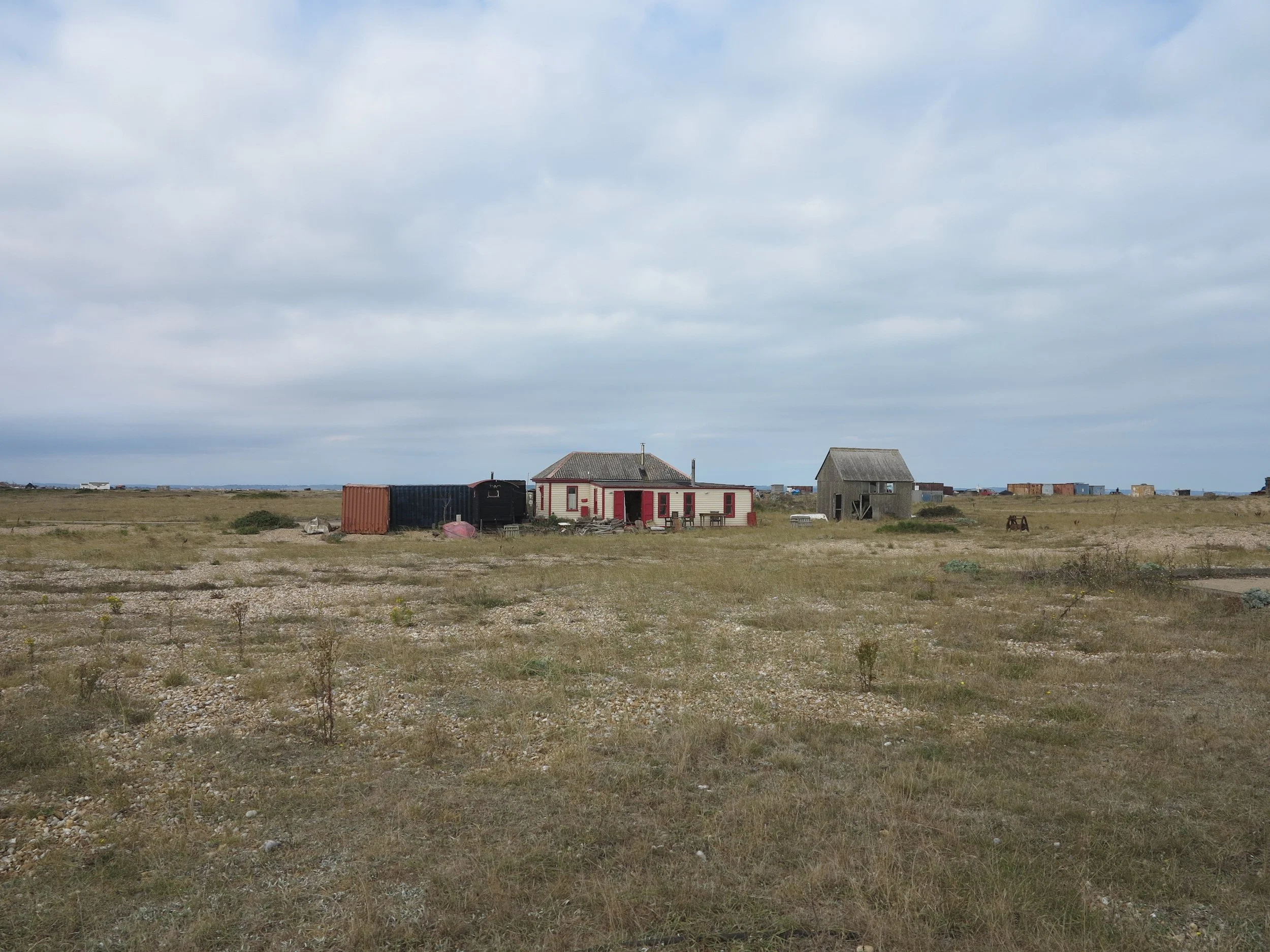
Adding to this feeling is the presence of the old nuclear power station, its dark silhouette dominating the landscape, but also everything else: rusting cars abandoned beside houses, buildings worn down by the wind, plants bent by salt, the yellow stones of the beach, and a black lighthouse watching over everything.
And yet, strangely, there was no anxiety in this vision of the end that appeared before me as I drank a third pint of ale. Sitting by the sea, I imagined instead a future in which, after centuries of consumption and occupation, the earth would slowly reclaim its own spaces.
Not nature’s revenge, but simply a return to balance: us left behind, together with our houses, our roads and our desire to dominate, along with my records and my books — although, unlike Jarman, I had not even made a film.
I found a strange peace in imagining this apocalypse: a world reduced to essentials, inhabited by a few creatures that would not need to invent a future because they would simply continue living. Perhaps global warming is heating tempers as well as seas and skies: in recent years I have often felt that we live in a world that is louder, more nervous, more angry.
Instead, that empty and silent landscape, swept by wind, had something reassuring about it. It was also a future in which I would no longer have to worry about finding work, or watch every day the absurd spectacle of a world where incompetence is often rewarded while others struggle to find their place.
A tempting prospect. Of course, there was one small problem: in that future without human beings, I would not have been able to order a fourth beer — this time a Guinness, an unavoidable choice in a good English pub.
And perhaps, thinking about it, that was reason enough to postpone the end of the world for a little longer.