Le città dentro Mumbai (prima parte)
Ho smesso ormai da tempo di contare le tazze di chai che bevo ogni volta che torno a Mumbai, e mi sembra anzi che il viaggio verso questa città, dopo dieci anni di intrusioni più o meno regolari, non cominci al momento dell’atterraggio, né quando il taxi lascia alle spalle il traffico dell’aeroporto di Chhatrapati Shivaji per dirigersi in città, ma soltanto più tardi, quando nella cucina di casa il latte viene messo a bollire insieme al tè, al cardamomo, allo zenzero e alle altre spezie del masala, e il loro odore, che ha qualcosa di domestico e al tempo stesso di remotissimo, comincia a diffondersi nelle stanze con quella lentezza che hanno certi profumi destinati a risvegliare una serie di immagini e di pensieri rimasti in sospeso.
Dalla finestra osservo allora il cielo di Mumbai, che dopo un volo sempre lungo, e negli ultimi anni reso ancora più lungo dalle guerre che costringono gli aerei a deviare, evitando spazi aerei divenuti improvvisamente inaccessibili, mi appare ogni volta come un cielo diverso da tutti gli altri che conosco. Mi è capitato spesso di pensare che anche l’aria possieda un proprio colore: nel Monferrato, soprattutto nelle giornate di settembre quando l’aria è tersa, mi sembra stendersi sulle colline come un velo azzurro e quasi polveroso; nella campagna inglese assume invece una tonalità argentea, una luce lattiginosa che cancella le ombre; qui a Mumbai, al contrario, ha qualcosa di rosa e giallo insieme, una qualità quasi dolciastra, come se l’intera città fosse immersa in una foschia che non vela soltanto il paesaggio, ma ne altera leggermente la sostanza. Mumbai, si sa, è una città notturna, la sua vera essenza si sveglia di notte, mentre di giorno dorme sotto questa copertina pastello dai colori tenui, come in hangover.
Il chai, che l’Occidente ha trasformato in una porcheria dolciastra, conserva qui una complessità che ha a che fare non solo con il gusto ma con la storia. Dentro una sola tazza si ritrovano infatti, in una forma quasi involontaria, tanto la violenza dei traffici coloniali quanto la pazienza delle cucine domestiche: il tè promosso dagli interessi dell’impero britannico, il latte e lo zucchero che ne hanno modificato la consistenza e il carattere, il cardamomo, la cannella, i chiodi di garofano e il pepe nero che lo hanno restituito a un lessico del gusto irriducibilmente indiano. Mentre guardo il liquido scurirsi fino a raggiungere quel colore di caramello opaco che conosco bene, mi torna in mente il rapporto ambiguo che l’India continua a intrattenere con l’Inghilterra, un intreccio di risentimento, fascinazione, ironia e ammirazione che, proprio perché così profondamente sedimentato nella vita quotidiana, sfugge a ogni interpretazione troppo netta - e che non riesco afferrare. A volte mi sembra sensato, proprio in virtù della storia coloniale; a volte mi sembra schizofrenico, per lo stesso identico motivo. E forse è anche per questo che il chai che bevo a Mumbai non assomiglia mai a quello che si beve a Londra, e ancor meno a quello che mi preparo a Milano: ogni casa custodisce la propria ricetta, come se in quella variazione minima, quasi impercettibile per un estraneo, sopravvivesse ancora una diversa maniera di organizzare la memoria. Lo stesso, sappiamo bene noi Italiani, capita con la moka: il mio caffè non ha lo stesso sapore di quello che faceva mia nonna, che era diverso da quello della mia vicina di casa. Ogni volta che cerco di spiegare a un indiano che in verità indiani e italiani sono molto simili, mi rispondono in inglese che non è vero, che loro sono inglesi, mah sarà… io nel dubbio gli chiedo se mi fanno un chai per capire che sapore ha il loro tè.
Il pomeriggio lo passo in uno stato di jet lag che mi rende di gomma, con la testa svuotata e il corpo che reagisce in ritardo a qualsiasi cosa. In questo tempo sospeso guardo film di Bollywood che comincio a capire sempre meglio man mano che il mio hindi si apre a frammenti di senso, qualche parola isolata, alcune frasi intere, e soprattutto le canzoni che finiscono per restarmi in testa e che, senza accorgermene, mi ritrovo a canticchiare.
È una forma di nostalgia che non ha oggetto preciso, o forse ne ha troppi: anni Settanta e Ottanta filtrati da una qualità visiva quasi VHS, colori iper-saturi, coreografie improvvise, melodie romantiche e spesso psichedeliche. Una nostalgia che non riguarda il passato che ho vissuto, ma quello che mi sembra di aver riconosciuto senza esserci mai stato davvero. La mia passione sono le colonne sonore di R.D. Burman, tanto che anni fa avevo curato uno show per NTS di musica di Bollywood per lo più con sue composizioni.
Un nibbio bruno si ferma sulla balaustra di ferro dell’alloggio mentre il cielo diventa rosso fuoco e una spessa coltre di inquinamento taglia l’orizzonte in due fasce sovrapposte, mentre il suono continuo dei clacson entra dalla finestra senza interruzioni.
Quello che mi ha sempre colpito di Mumbai è una forma strana di assuefazione dello sguardo. Nei primi giorni tutto sembra eccessivo: il rumore, la densità delle persone, la povertà che attraversa le strade senza mai nascondersi del tutto, i fasti di una delle più ricche società al mondo. Poi, quasi senza accorgermene, qualcosa si sposta: il cervello smette di registrare tutto con la stessa intensità, come se selezionasse da solo ciò che può permettersi di vedere e ciò che deve lasciare sullo sfondo.
Resta allora una percezione diversa, più rarefatta, in cui la città non è meno presente ma semplicemente filtrata. I suoni continuano, gli odori anche, ma non hanno più lo stesso peso. È una forma di distacco che nasce dall’adattamento: una soglia che si abbassa lentamente fino a diventare abitabile. Che sia questo il segreto della calma che i miei amici indiani trasmettono?
La mattina dopo, tra gli ibischi e le pervinche rosa di Hanging Gardens, mi siedo su una panchina di ferro battuto a leggere, non lontano da un cane randagio che sonnecchia accoccolato sotto un fico benghalese, sui cui tronchi il municipio di Mumbai ha dipinto, quasi a intervalli regolari, la bandiera indiana.
Gli alberi sono alti ma leggeri, con radici aeree che scendono dai rami come fili sottili e si confondono con il tronco, fino a far perdere il confine tra ciò che sostiene e ciò che è sostenuto. Hanno qualcosa di quasi gotico, in questa struttura sospesa, come se la crescita non procedesse verso l’alto ma si espandesse lateralmente, in più direzioni contemporaneamente.
E mi accorgo che questa qualità non riguarda solo gli alberi, ma anche la città, che a tratti sembra avere la stessa natura stratificata, ramificata, e leggermente notturna anche sotto la luce piena del mattino. Intere aree di Mumbai, specialmente vicino alla stazione centrale e di chiara progettazione coloniale, potrebbero finire dentro un romanzo gotico, ma un gotico tropicale. Mi perdo poco dopo nella stazione Chhatrapati Shivaji Maharaj, o come si è chiamata per lungo tempo: Victoria Station. Un’esplosione di gotico tropicale, dove pavoni di pietra sembrano dialogare con i gargoyle della facciata, mentre uomini in giacca e cravatta, con gli eleganti colletti Bandhgala, attraversano lo spazio in ogni direzione per prendere treni stipati, già in ritardo prima ancora di partire. Altri, seduti direttamente a terra, pranzano con i tiffin box, le scatole di latta impilabili in cui il pranzo arriva ancora caldo, e sorseggiano chai con una calma che sembra appartenere a un altro tempo. Mi viene da chiedermi che sapore abbia quel chai, e lo chiedo quasi a me stesso, osservando un uomo con i baffi perfettamente curati e un ciuffo morbido e fresco, senza però interrompere il suo gesto.
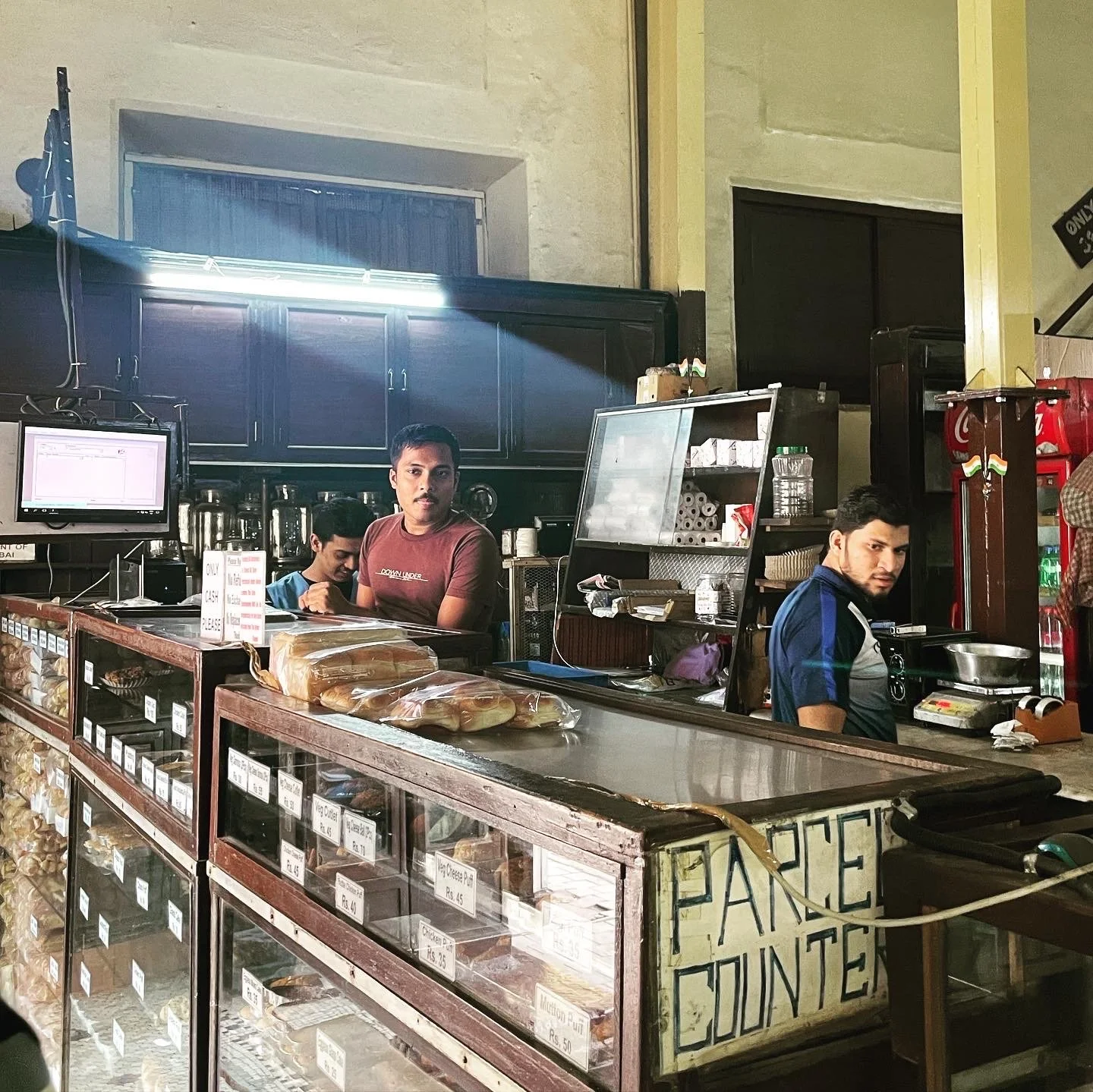
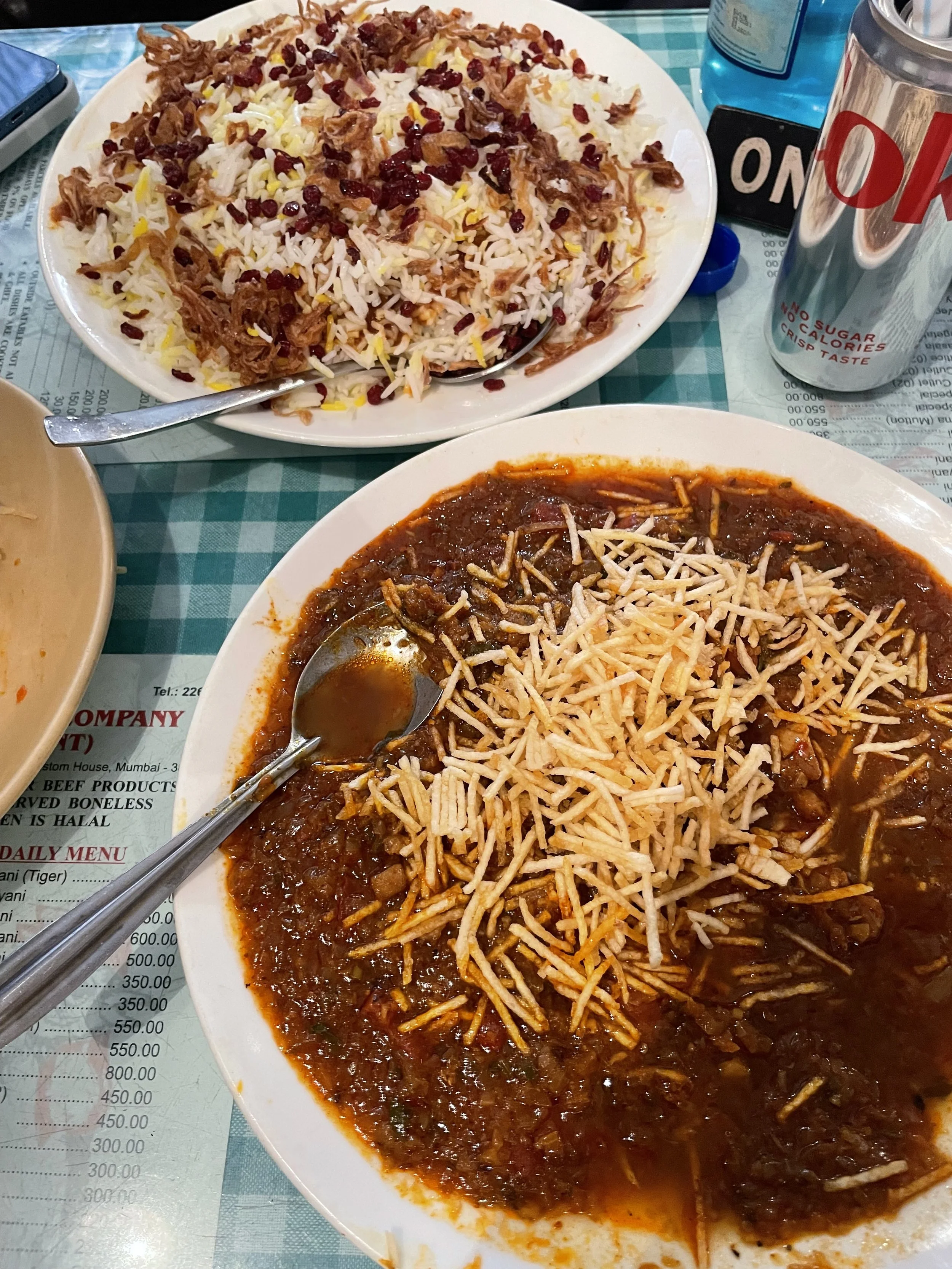
È da Kayani che torno ogni anno per un’omelette parsi, che arriva al tavolo gonfia e irregolare, piena di cipolla, pomodoro e peperoncino tagliati finissimi, con quel misto di spezie che punge senza mai diventare aggressivo. La mangio con i panini al latte imburrati e, a volte, con qualcosa di più sostanzioso da dividere con gli amici — un curry di montone, qualche Kingfisher, il tavolo che si riempie lentamente di piatti e di bottiglie.
Kayani, aperto da più di un secolo, è una di quelle caffetterie parsi che a Mumbai sembrano arrivare da una nostalgia che di nuovo non mi appartiene ma che percepisco come mia. Ci torno ogni anno non soltanto per il cibo, ma per quella particolare atmosfera di continuità che il locale riesce ancora a conservare: i tavolini stretti, il brusio della sala, i camerieri che si muovono rapidi tra una clientela in gran parte locali, sono l’unico occidentale in quel momento e ne sono lusingato.
Mi tuffo nel piatto di curry di montone che è speziato e che viene servito con delle patatine fritte chiamate sali, che sembrano capelli. Le spezie sono un affare serio qui nella comunità Parsi di Mumbai e anche l’omelette viene insaporita con cumino, zenzero, curcuma e un po’ di coriandolo.
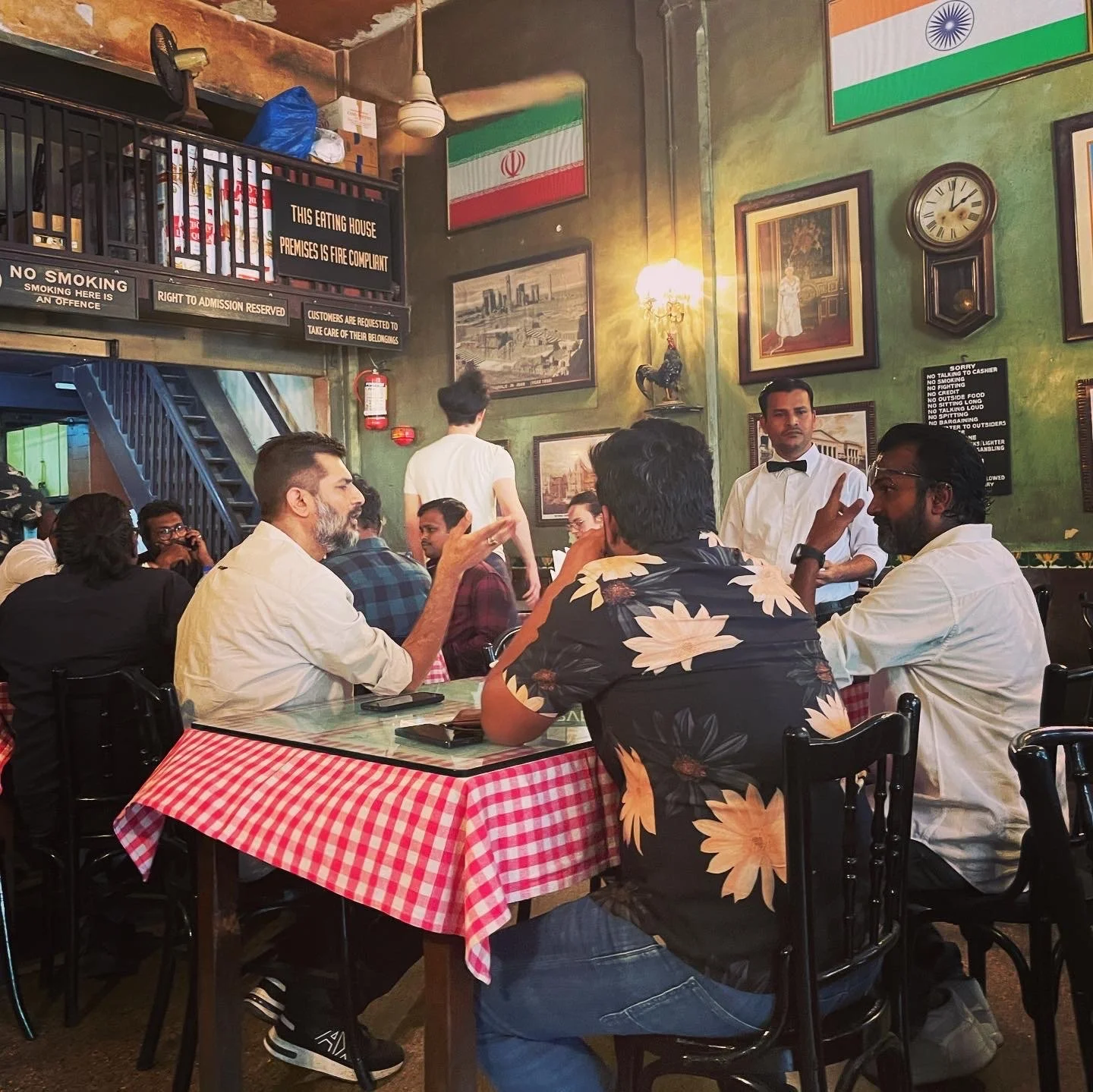
La cucina parsi nasce da una doppia fedeltà: a un’origine persiana mai del tutto dimenticata e a una lunga capacità di adattamento alla costa occidentale dell’India. I Parsi arrivano tra Gujarat e poi Bombay come diaspora zoroastriana dalla Persia, ma è nella città portuale, dentro le reti commerciali dell’Oceano Indiano e poi dell’impero britannico, che la loro identità prende la forma che ancora oggi conosciamo. Anche la cucina porta i segni di questa storia mobile: carne e uova accanto a spezie indiane, dolce e acido che convivono nello stesso piatto, frutta secca, riso, aceto, eredità persiane rimescolate con ingredienti gujarati e con la vita urbana di Bombay. Non è una cucina “pura”, e proprio per questo è così interessante: è una cucina di minoranza, di porto, di attraversamento, nata non dalla conservazione intatta di un’origine ma dalla sua continua negoziazione. Mangiare parsi, a Mumbai, significa in fondo assaggiare una storia di migrazione riuscita, in cui il cibo diventa il modo più concreto per tenere insieme memoria, commercio, religione e adattamento.
Naturalmente, come molte comunità piccole, ricche e molto consapevoli della propria eccezionalità storica, anche i Parsi non sono immuni da una certa ossessione per il rango, i soldi, i matrimoni giusti e il capitale sociale. Bombay, del resto, è una città che trasforma il prestigio in una seconda religione, e i Parsi — che ne hanno contribuito a costruire una parte decisiva — non fanno eccezione.
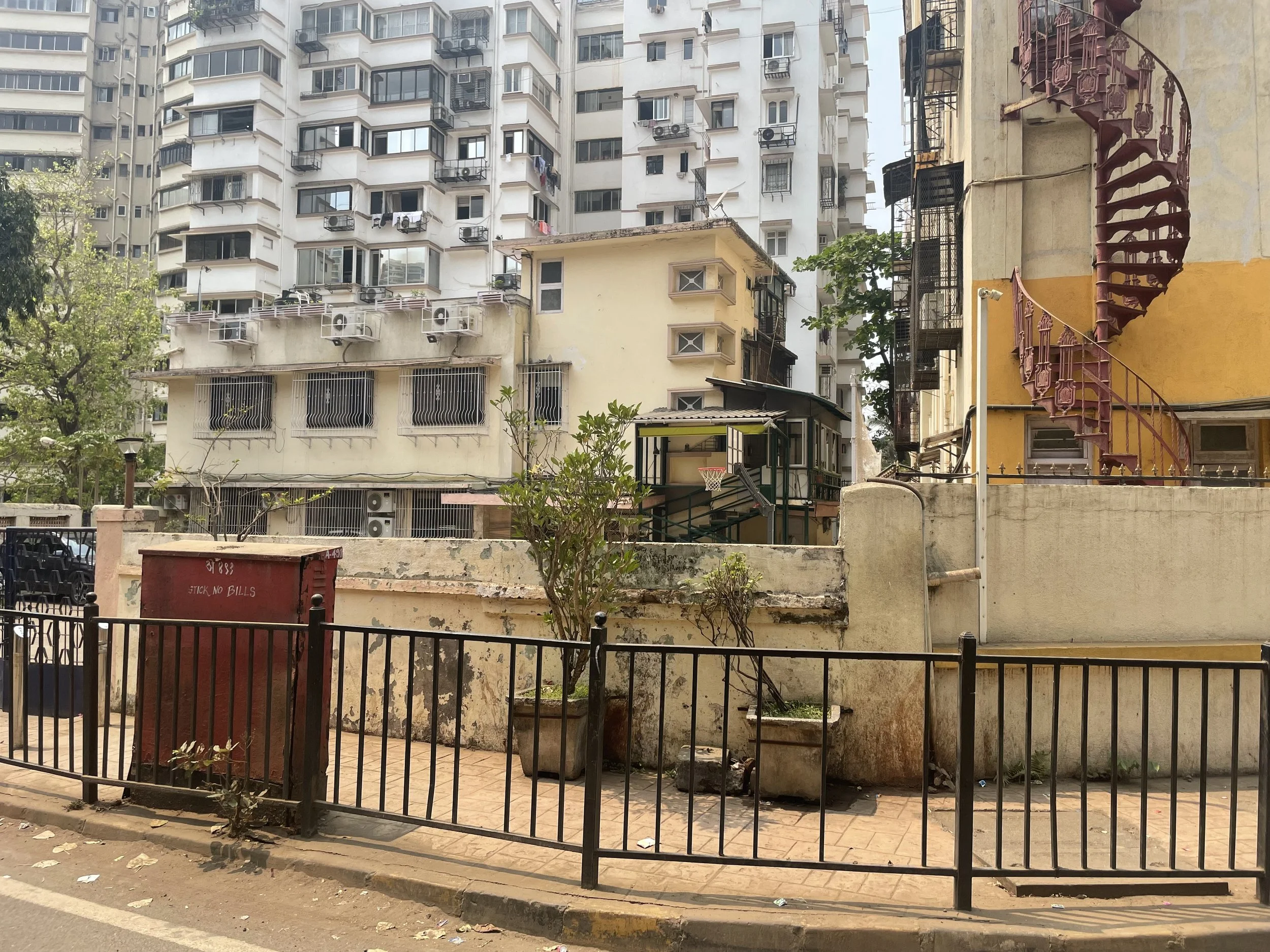
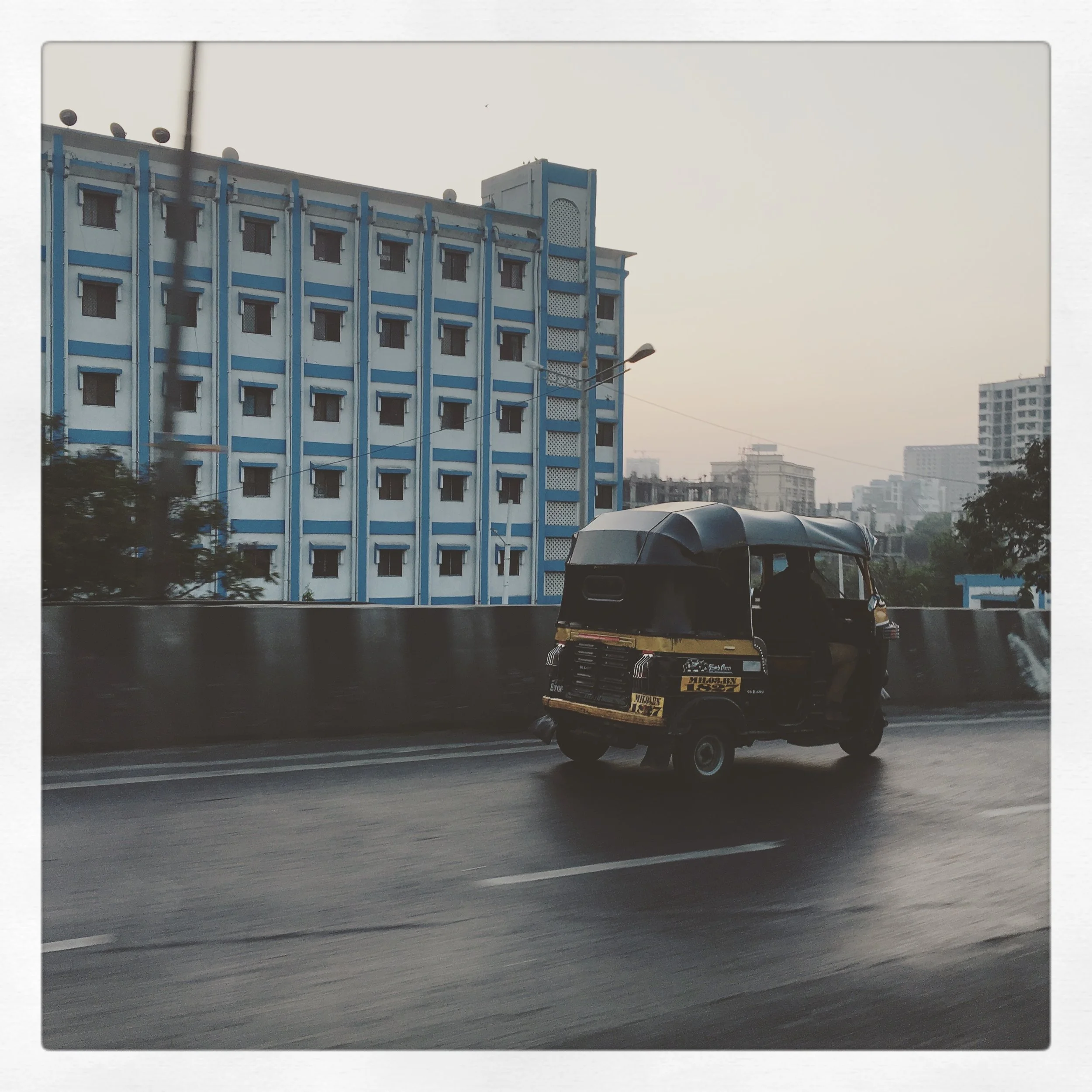
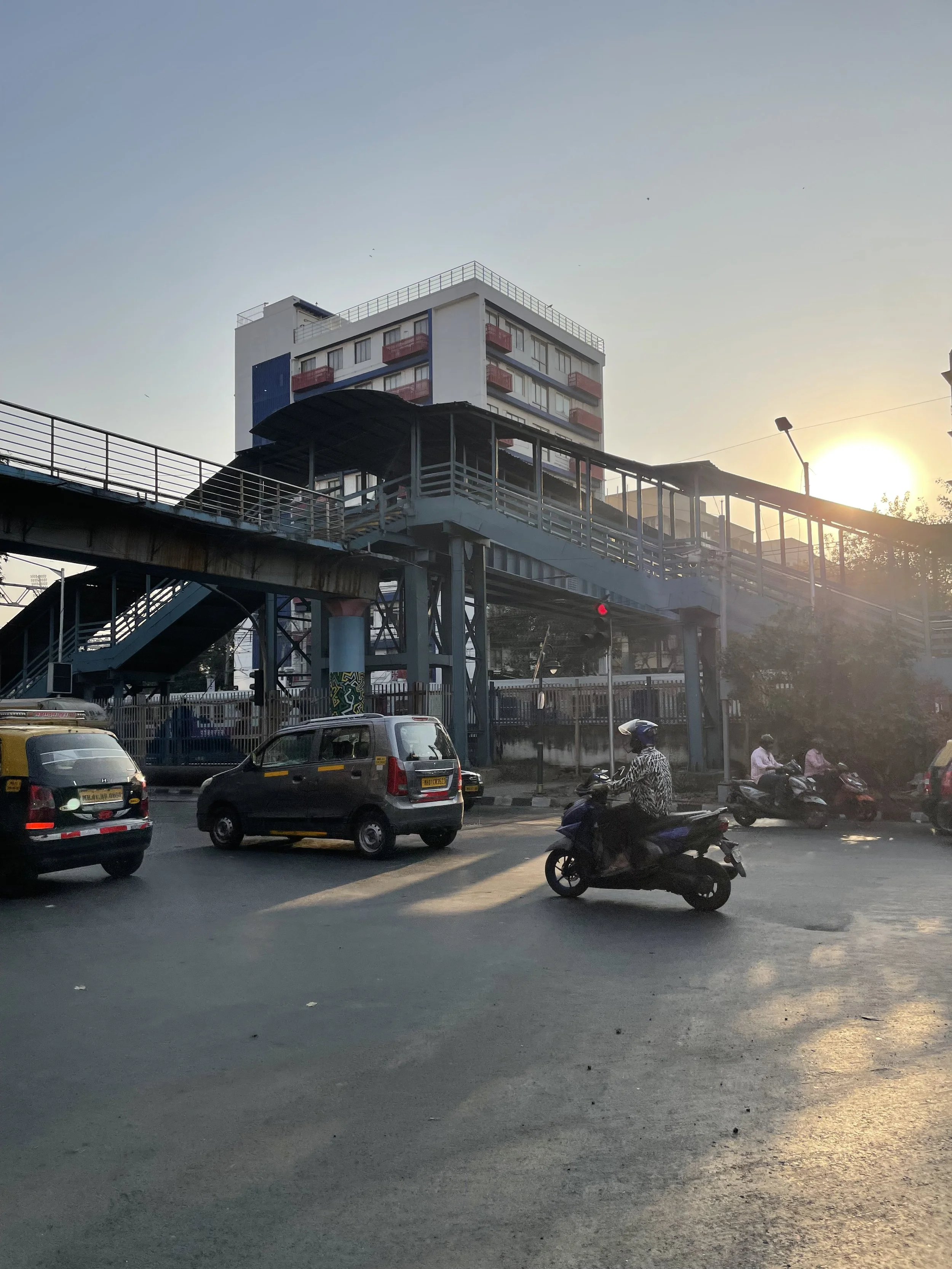
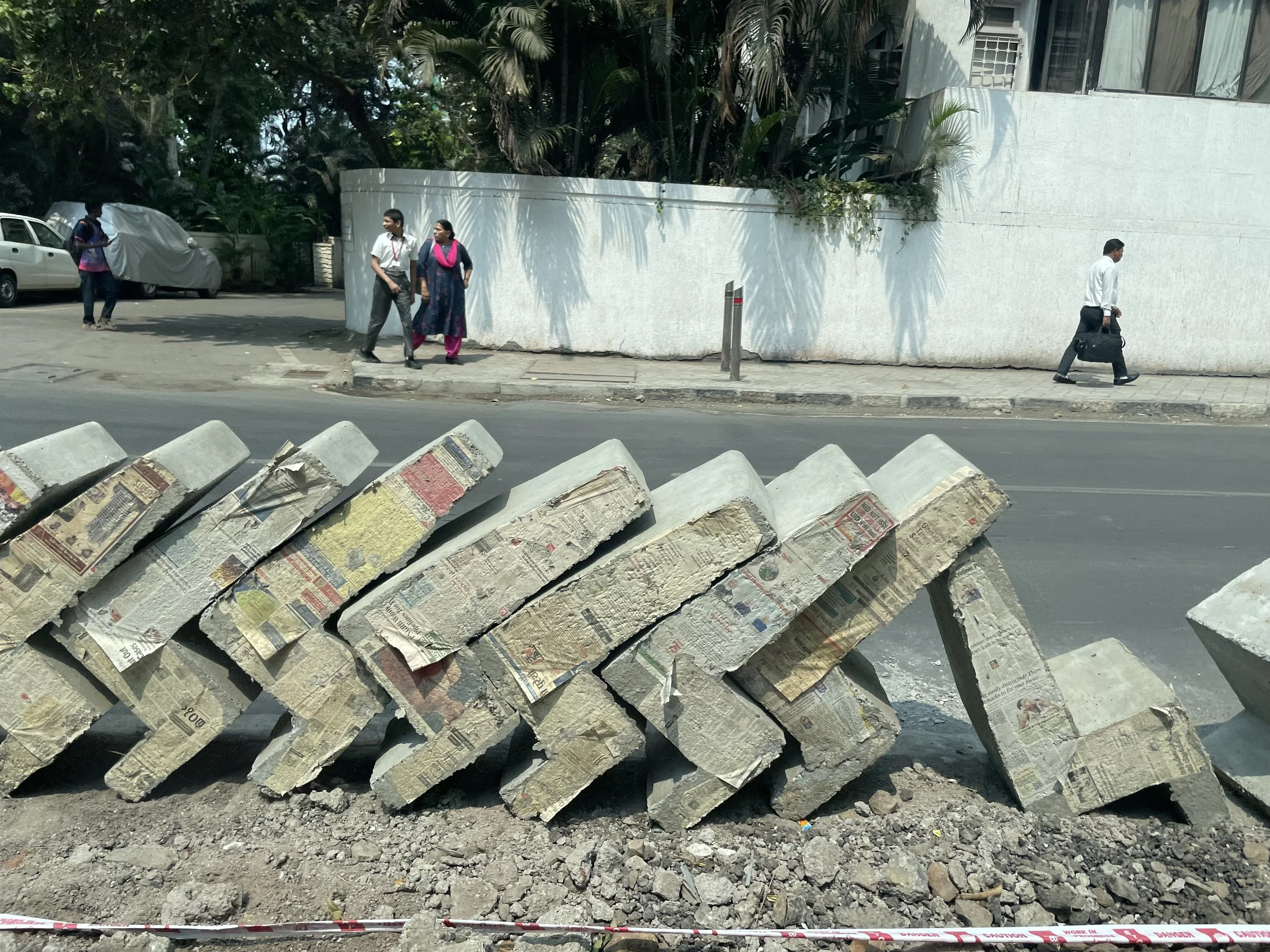
Mumbai è un cantiere a cielo aperto. In tutta la città si scava, si costruisce, si allineano strade, si alzano sopraelevate, si estendono metropolitane. Ventidue milioni e mezzo di persone vivono dentro questo movimento continuo di demolizione e ricostruzione. Come tutte le grandi città del mondo, Mumbai esiste proprio in virtù di questa costante evoluzione: non smette mai di cambiare ma rimane sempre Mumbai. Proprio come ogni volta che torno a New York, la trovo diversa e sempre uguale, così il porto indiano mi stupisce sempre pur cambiando costantemente.
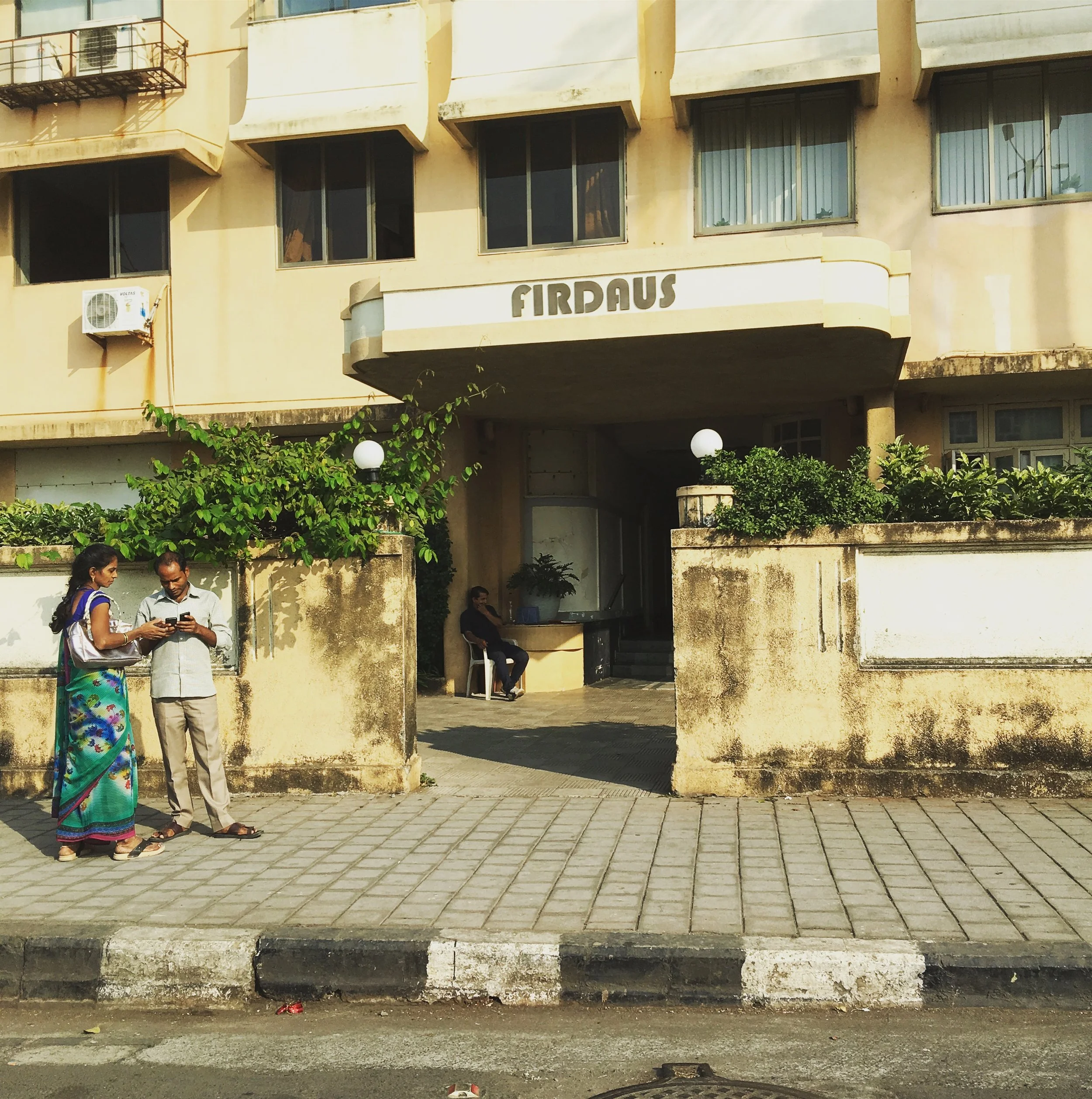
Anche Ballard Estate, che mantiene ancora una sua patina ordinata e quasi teatrale, è attraversata da lavori in corso. I palazzi coloniali, con quel loro giallo antico leggermente scolorito, sembrano trattenere una ricchezza passata fatta di traffici con l’Europa, mentre intorno si aprono cantieri e buche che ne interrompono la simmetria. Sotto i fichi bengalesi restano parcheggiate alcune vecchie Royal Enfield, accanto ai venditori di kulfi che occupano gli angoli delle strade come presenze stabili in un paesaggio che cambia.
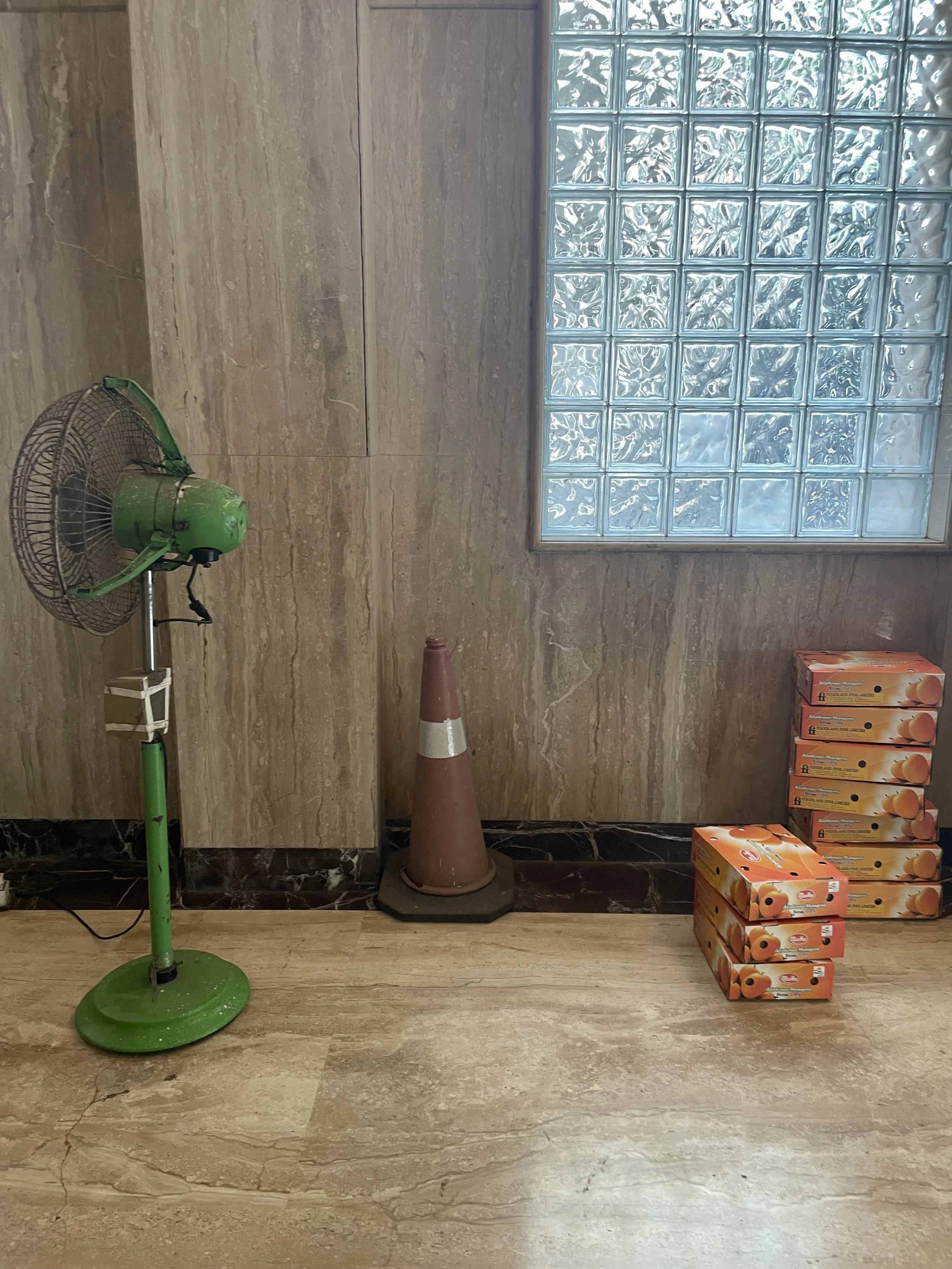
Entro in una galleria che conserva e mostra i lavori di Maqbool Fida Husain, attraversando questa zona che un tempo era il cuore commerciale della città e che oggi sembra oscillare tra decoro residuo e trasformazione ininterrotta. Una pila di casse di Alphonso mango è impilata nella hall del palazzo, mentre il portinaio, dietro una montatura spessa anni Settanta, mi indica la prima scala a destra senza alzare troppo lo sguardo.
Alla galleria incontro l’ennesimo curatore poco simpatico — sembra quasi una categoria professionale internazionale — e per un attimo mi torna in mente che ho passato anni della mia vita tra vernissage a Londra, spesso ubriaco, in una sequenza quasi regolare di aperture e chiusure. Almeno quattro a settimana, per anni, sempre con lo stesso schema: bicchieri di vino bianco gratuito, non sempre freddo, stanze bianche, conversazioni intermittenti.
Mi muovevo per la città in bicicletta, sbronzo e felice, tra White Cube, Cork Street e le altre gallerie del centro, attraversando Londra con una sensazione di libertà che oggi mi torna in mente in modo quasi automatico, come una memoria che si attiva senza richiesta, anche quando sono qui, dentro il caldo e il rumore di Mumbai.
Come per l’Inghilterra, anche l’India è attraversata da una forma di classismo che non ha bisogno di essere dichiarata per essere percepita: è nell'aria, proprio come quella luce rosa e gialla che mi affascina. Il gallerista, con ogni probabilità educato in istituzioni prestigiose, mi guarda con una cortesia infastidita che non lascia spazio a interpretazioni: i miei pantaloncini cachi e la mia polo consumata appartengono chiaramente a un’altra grammatica sociale.
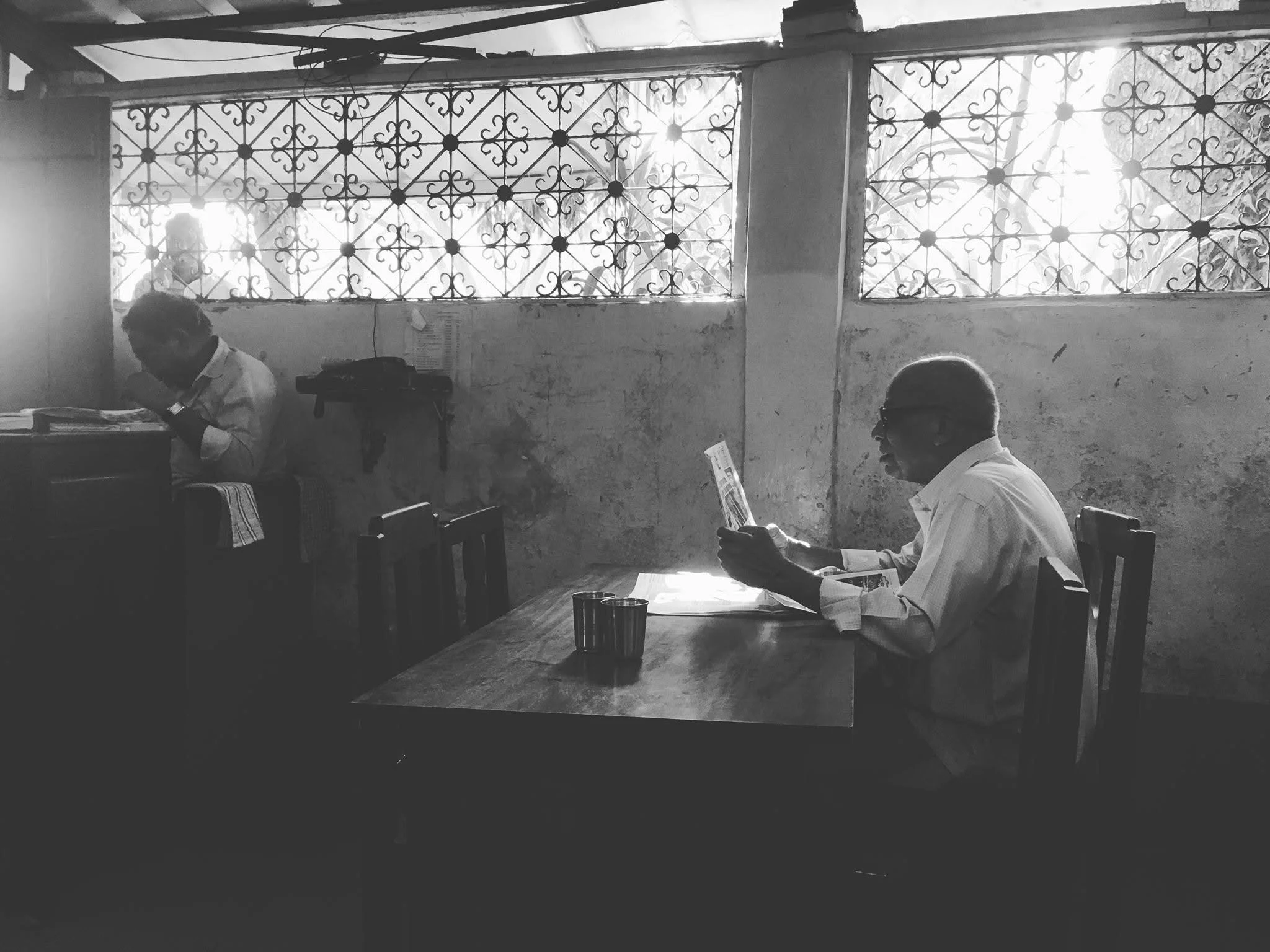
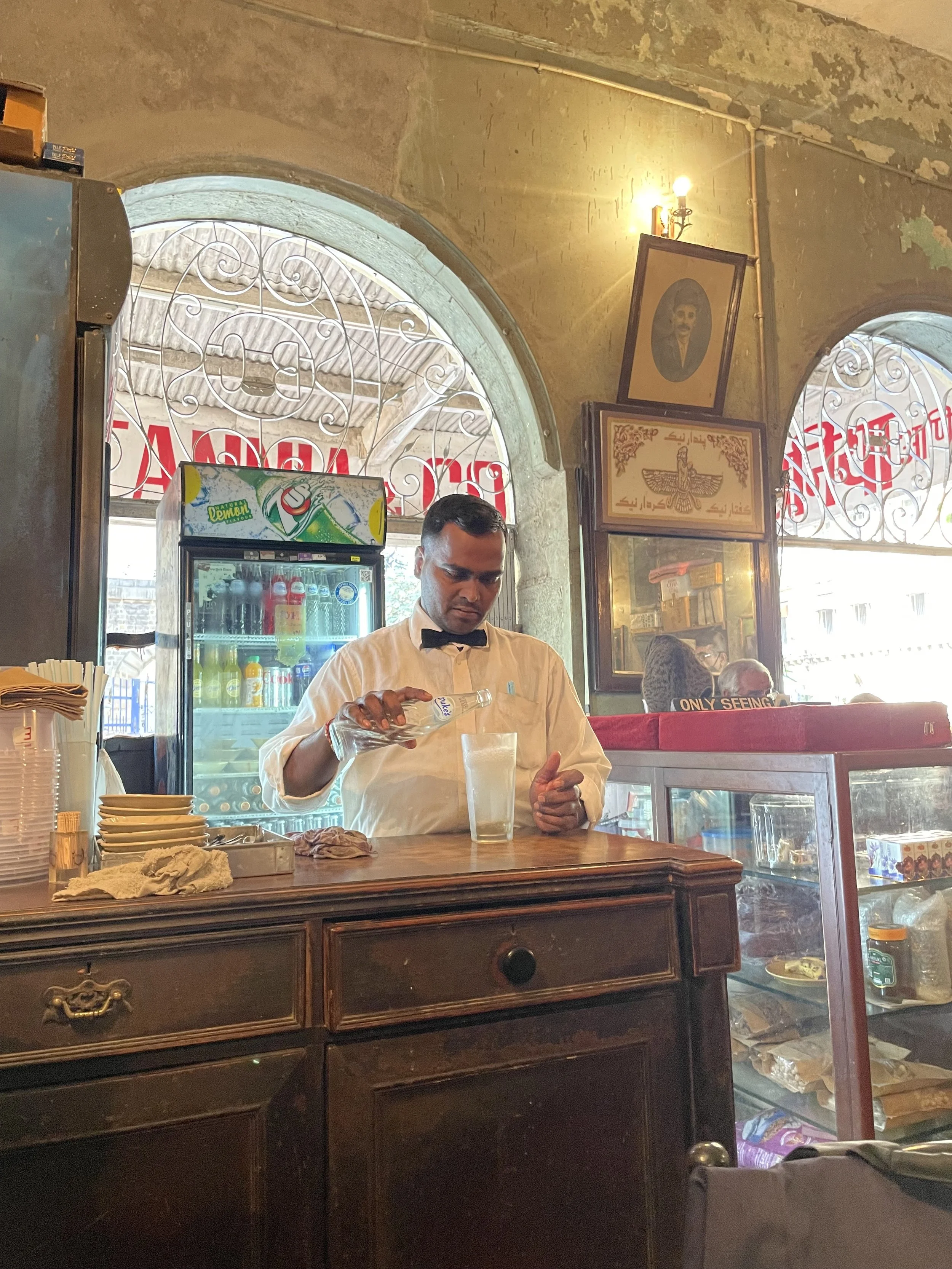
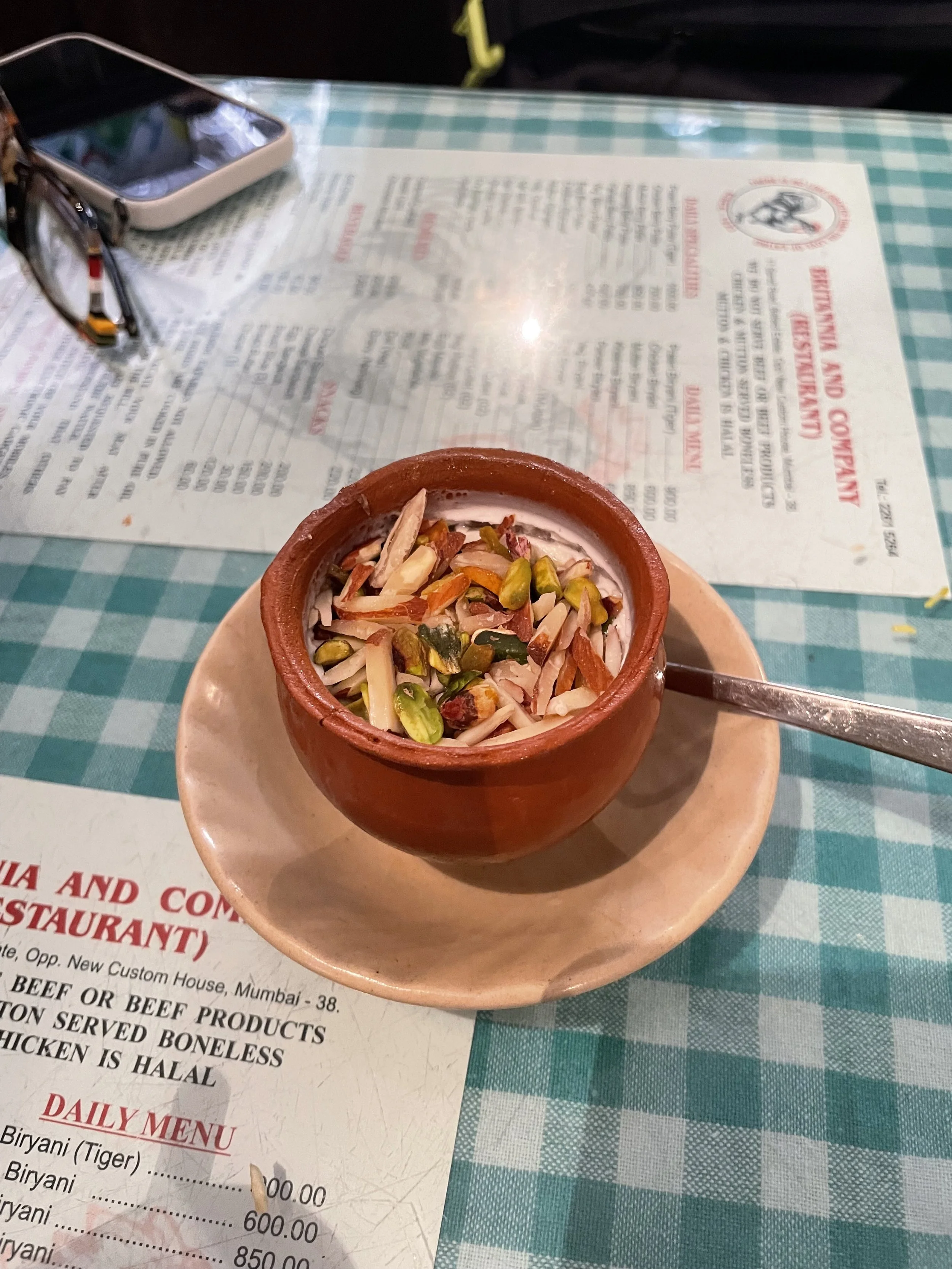
Cerco una birra fredda e finisco al Britannia & Co., dove tutto sembra sospeso in una forma di continuità leggermente fuori tempo. È il tipo di posto in cui la nostalgia non è un sentimento ma una condizione ambientale. Le tovaglie a scacchi, le pale di legno che girano lentamente per muovere l’aria, le signore parsi vestite con colori accesi che bevono chai e condividono piatti di pollo e pasta sfoglia, e i gruppi di white collar con le loro camicie perfette e le barbe curate: tutto contribuisce a una scena che sembra non voler scegliere tra epoche diverse.
Mi chiedo spesso quanto di ciò che penso sia l’India appartenga davvero a ciò che vedo, e quanto invece sia una proiezione, una selezione involontaria di immagini che cerco e che riconosco prima ancora di comprenderle. Il turista, in fondo, è sempre qualcuno che sovrascrive il presente con le proprie aspettative: succede in Italia, dove dai tempi del Grand Tour fino ai reel di Instagram con hashtag come #vitalenta, si continua a produrre una visione sospesa del paese, popolata di anziani che giocano a carte e tramonti immobile, come se il lavoro e la complessità sociale non esistessero.
E allora mi chiedo se a Mumbai non stia facendo lo stesso. L’India contemporanea è una delle economie più dinamiche e industrializzate del mondo, una democrazia complessa che si muove su scale globali, eppure io continuo a tornare su certi frammenti: Ballard Estate, un Alphonso mango mangiato all’ombra di un edificio coloniale, la cucina parsi, il chai.
Torno nel mondo reale quando il mio amico Rana mi scrolla le spalle: “Ciao, scusa il ritardo, sai il traffico qui” sorride sotto una barba ormai un po’ grigia: “Mumbai è a due ore da Mumbai, no?” ridiamo e ordiniamo Dhansak, lenticchie e pollo, e un chilo di biryani in stile parsi, con l’acqua di rose, lo zafferano, e un mix di masala che mi ammalia.
All the cities in Mumbai
part 1
I have long stopped counting the cups of chai I drink every time I return to Mumbai, and it now seems to me that the journey to this city, after ten years of more or less regular intrusions, does not begin at the moment of landing, nor when the taxi leaves behind the traffic of Chhatrapati Shivaji airport and heads into the city, but only later, when in the kitchen of the house the milk is put on the boil with tea, cardamom, ginger and the other spices of masala, and their smell, which is at once domestic and remote, begins to spread through the rooms with that slowness characteristic of certain scents that seem designed to awaken a series of suspended images and thoughts.
From the window I then look at the sky of Mumbai, which after a flight that is always long, and in recent years made even longer by wars that force aircraft to deviate, avoiding airspaces that have suddenly become inaccessible, appears to me each time as a sky different from all the others I know. I have often thought that even air has its own colour: in Monferrato, especially on clear September days, it seems to stretch over the hills like a pale, dusty blue veil; in the English countryside it takes on a silvery tone, a milky light that erases shadows; here in Mumbai, by contrast, it has something both pink and yellow, an almost sugary quality, as if the entire city were immersed in a haze that does not merely veil the landscape but slightly alters its very substance. Mumbai, as is well known, is a nocturnal city; its true essence awakens at night, while by day it sleeps under this pastel blanket of soft colours, like a hangover.
Chai, which the West has turned into a sugary distortion of itself, retains here a complexity that has to do not only with taste but with history. Within a single cup one finds, almost involuntarily, both the violence of colonial trade routes and the patience of domestic kitchens: tea promoted by the interests of the British Empire, milk and sugar that altered its consistency and character, and cardamom, cinnamon and cloves that returned it to an unmistakably Indian vocabulary of taste. As I watch the liquid darken into that opaque caramel colour I know so well, I am reminded of the ambiguous relationship India continues to maintain with England, an intertwining of resentment, fascination, irony and admiration which, precisely because so deeply sedimented in everyday life, escapes any neat interpretation — and which I fail to grasp. At times it seems coherent, in light of colonial history; at times schizophrenic, for the very same reason. And perhaps this is also why the chai I drink in Mumbai never resembles the one served in London, and even less the one I make in Milan: each house preserves its own recipe, as if within that minimal variation, almost imperceptible to an outsider, another way of organising memory still survives. The same, we Italians know well, happens with the moka: my coffee does not taste like the one my grandmother used to make, which was different again from that of my neighbour. Every time I try to explain to an Indian that Italians and Indians are in fact very similar, they reply in English that it is not true, that they are English — well, perhaps… in the meantime I ask them for a chai, to understand what their tea actually tastes like.
The afternoon passes in a state of jet lag that renders me rubbery, my mind emptied, my body reacting to everything with delay. In this suspended time I watch Bollywood films that I begin to understand more and more as my Hindi opens up in fragments of meaning, isolated words, occasional complete sentences, and above all songs that remain stuck in my head and which I find myself humming without noticing.
It is a form of nostalgia without a precise object, or perhaps with too many: the 1970s and 1980s filtered through a VHS-like visual quality, hyper-saturated colours, sudden choreographies, romantic and often psychedelic melodies. A nostalgia that does not concern a past I have lived, but one I seem to recognise without ever having truly been there. My passion is the soundtracks of RD Burman, so much so that years ago I curated a show for NTS of Bollywood music mostly composed by him.
A black kite lands on the iron balcony rail of the apartment while the sky turns fiery red and a thick layer of pollution divides the horizon into two overlapping bands, while the constant sound of car horns enters the room without interruption.
What has always struck me about Mumbai is a strange form of habituation of the gaze. In the first days everything appears excessive: the noise, the density of people, the poverty that moves through the streets without ever fully hiding, the splendour of one of the richest societies in the world. Then, almost without noticing, something shifts: the brain stops registering everything with the same intensity, as if it begins to select on its own what it can afford to see and what must remain in the background.
What remains is a different perception, more rarefied, in which the city is no less present but simply filtered. Sounds continue, smells too, but they no longer carry the same weight. It is a form of detachment born of adaptation: a threshold that slowly lowers until it becomes inhabitable. Is this perhaps the secret of the calm my Indian friends transmit?
The next morning, among the hibiscus and pink periwinkles of the Hanging Gardens, I sit on a wrought-iron bench reading, not far from a stray dog dozing curled up under a banyan fig tree, on whose trunks the municipality of Mumbai has painted, at regular intervals, the Indian flag.
The trees are tall yet light, with aerial roots descending from the branches like thin threads merging with the trunk, until the boundary between what supports and what is supported is lost. They have something almost Gothic about them, in this suspended structure, as if growth did not proceed upwards but expanded laterally, in multiple directions at once.
And I realise that this quality does not concern only the trees, but also the city, which at times seems to share the same stratified, branching and slightly nocturnal nature even in full daylight. Entire areas of Mumbai, especially near the central station and of clearly colonial design, could belong inside a Gothic novel — a tropical Gothic.
I soon find myself lost in Chhatrapati Shivaji Maharaj station, or as it was long called: Victoria Station. An explosion of tropical Gothic, where stone peacocks seem to converse with the gargoyles of the façade, while men in suits, wearing elegant Bandhgala collars, cross the space in every direction to catch overcrowded trains already delayed before departure. Others, sitting directly on the ground, eat from tiffin boxes, stacked tin containers in which lunch arrives still warm, and sip chai with a calm that seems to belong to another time. I find myself wondering what that chai tastes like, asking myself almost silently, watching a man with perfectly groomed moustache and a soft, neat tuft of hair, without interrupting his gesture.
It is at Kayani that I return each year for a Parsi omelette, arriving at the table swollen and irregular, filled with finely chopped onion, tomato and chilli, with that mix of spices that pricks without ever becoming aggressive. I eat it with buttered milk buns and, at times, something more substantial to share with friends — a mutton curry, a few Kingfishers, the table gradually filling with plates and bottles.
Kayani, open for more than a century, is one of those Parsi cafés in Mumbai that seem to arrive from a nostalgia that is not mine, yet which I nevertheless perceive as my own. I return each year not only for the food, but for that particular atmosphere of continuity the place still manages to preserve: narrow tables, the murmur of the room, waiters moving quickly among a largely local clientele. I am the only Westerner at that moment, and I feel strangely flattered.
I dive into a plate of mutton curry, spicy, served with fries called sali, which resemble hair. Spices are serious business in the Parsi community of Mumbai, and even the omelette is flavoured with cumin, ginger, turmeric and a little coriander.
Parsi cuisine emerges from a double allegiance: to a Persian origin never entirely forgotten, and to a long capacity for adaptation to the western coast of India. The Parsis arrived in Gujarat and later Bombay as a Zoroastrian diaspora from Persia, but it is in the port city, within the commercial networks of the Indian Ocean and later the British Empire, that their identity took the form we recognise today. Their cuisine bears the traces of this mobile history: meat and eggs alongside Indian spices, sweet and sour coexisting in the same dish, dried fruit, rice, vinegar — Persian inheritances recombined with Gujarati ingredients and the urban life of Bombay. It is not a “pure” cuisine, and precisely for that reason it is so compelling: a cuisine of minority, of port, of crossing, born not from the preservation of an intact origin but from its continuous negotiation.
Naturally, like many small, wealthy and deeply self-aware minority communities, the Parsis are not immune to a certain obsession with rank, money, appropriate marriages and social capital. Bombay, after all, is a city that turns prestige into a second religion, and the Parsis — who helped build a significant part of it — are no exception.
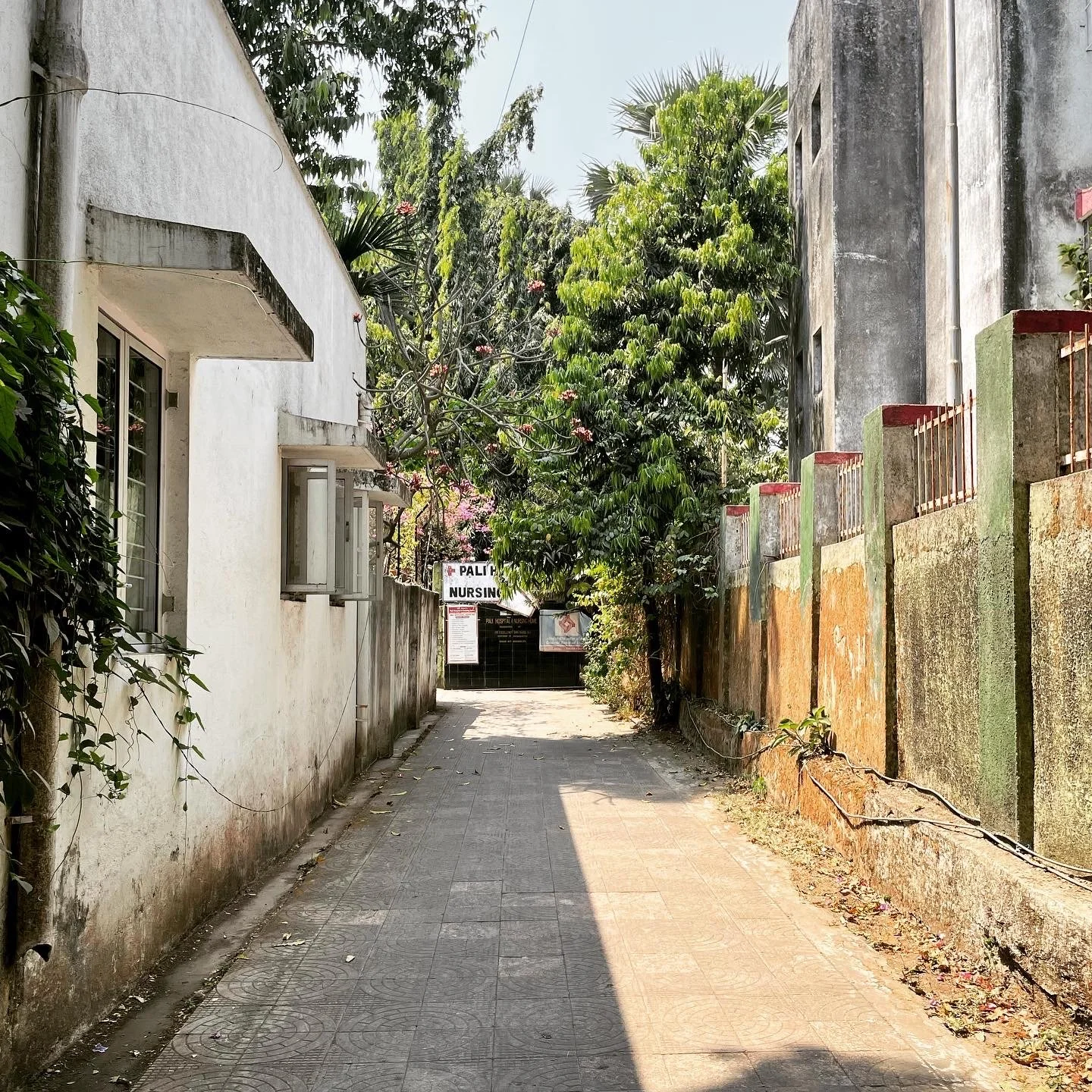
Mumbai is a city under perpetual construction. Across it, everything is being dug up, rebuilt, realigned: roads, flyovers, metro lines. Twenty-two and a half million people live inside this continuous movement of demolition and reconstruction. Like all great cities, Mumbai exists precisely through this constant evolution: it never stops changing, yet always remains itself. Just as every time I return to New York I find it different and yet recognisable, the Indian port city always surprises me even as it shifts.
Ballard Estate, too, which still retains a slightly theatrical, orderly patina, is crossed by construction sites. The colonial buildings, with their faded yellow surface, seem to hold onto a past wealth made of trade with Europe, while around them trenches and works interrupt their symmetry. Under the banyan trees stand old Royal Enfields, alongside kulfi vendors who occupy street corners like permanent presences in a changing landscape.
I enter a gallery showing the works of Maqbool Fida Husain, moving through this district that was once the commercial heart of the city and now seems to oscillate between residual decorum and uninterrupted transformation. A stack of Alphonso mango crates is piled in the hall of the building, while the porter, behind thick seventies glasses, points me toward the first staircase on the right without lifting his gaze.
At the gallery I meet the usually unpleasant curator — almost an international professional category — and for a moment I am reminded that I spent years of my life at vernissages in London, often drunk, in a near-regular sequence of openings and closings. At least four a week, for years, always the same pattern: free white wine, not always cold, white rooms, intermittent conversations.
I moved through the city by bicycle, drunk and happy, between White Cube, Cork Street and the other galleries of central London, crossing the city with a sense of freedom that now returns almost automatically, as a memory that activates itself without request, even here, in the heat and noise of Mumbai.
Like England, India too is traversed by a form of classism that does not need to be declared in order to be perceived: it is in the air, just like that pink and yellow light that fascinates me. The curator, most likely educated in prestigious institutions, looks at me with an irritated courtesy that leaves no room for interpretation: my khaki shorts and worn polo shirt clearly belong to another social grammar.
I look for a cold beer and end up at Britannia & Co., where everything seems suspended in a slightly out-of-time continuity. It is the kind of place where nostalgia is not a feeling but an environmental condition. Chequered tablecloths, wooden ceiling fans turning slowly to move the air, Parsi women dressed in bright colours drinking chai and sharing plates of chicken and puff pastry, and groups of white-collar workers with perfect shirts and well-kept beards: everything contributes to a scene that refuses to choose between epochs.
I often wonder how much of what I think India is belongs to what I actually see, and how much is instead projection, an involuntary selection of images I seek and recognise before I fully understand them. The tourist, after all, is always someone who overwrites the present with their expectations: as in Italy, where since the Grand Tour and now through Instagram reels with hashtags like #vitalenta, a suspended image of the country continues to be produced, populated by old men playing cards and motionless sunsets, as if work and social complexity did not exist.
And so I wonder whether I am doing the same in Mumbai. Contemporary India is one of the most dynamic and industrialised economies in the world, a complex democracy operating on a global scale, yet I continue to return to certain fragments: Ballard Estate, an Alphonso mango eaten in the shade of a colonial building, Parsi cuisine, chai.
I am brought back to the real world when my friend Rana shakes my shoulder: “Hi, sorry I’m late, you know how the traffic is,” he smiles under a slightly greying beard. “Mumbai is two hours away from Mumbai, isn’t it?” We laugh and order Dhansak, lentils and chicken, and a kilo of Parsi-style biryani, with rose water, saffron, and a mix of masala that intoxicates me.
TO BE CONTINUE